You can pick up a lot of eating advice these days. I don’t want to add to the confusion. These four books simplify the conflicting messages that circulate around food. The study of nutrition can make us aware of how great God is and how little we know; how detailed each body system is and yet how it is all interconnected. Just because it’s complicated doesn’t mean you shouldn’t act on the little you know, or apply yourself to learn as much as you can. If this is something that interests you, check out these books and see if they might be your next informative read.
Three of these books are science-based and one is a combination of science and old time common sense.

Eat & Flourish by Mary Beth Albright. 2022
This books uses science to support the premise that there is a food/mood connection. Ms. Albright claims, according to her research, that food has the power to nourish our minds as well as our bodies. She uses a two part approach of both nutrients and pleasure.
Like it or not, we are emotional eaters, she says. Then she goes on to show us how to choose foods that will support us emotionally. She has a special ability to take confusing ideas and complex studies and present them in a way that’s understandable to the average reader.
After reading this book, you will better understand how foods cause or reduce inflammation and how that effects your mental health. You will know more about the intricate relationship between gut microbes and the brain. You will learn which nutrients restore us during emotional times.
You may want to take the evolutionary ideas with a grain of salt.
Included is her favorite recipes at the end of each chapter and a thirty day plan for eating for emotional stability. There are only four elements to keep in mind: nutrients, pleasure, inflammation and gut microbiome, which makes the complex information easier to remember. The recipes were simple and easily doable for the average eater. All of them seemed like something I would/could make.

How to Eat Better by James Wong 2017
Mr. Wong uses science and research to identify the food in each category that has the highest nutrients. He lists most fruits and vegetables and also pantry staples and gives you plenty of information so you can make choices based on your needs.
In the grocery store, he shows you how to choose the healthiest version of each ingredient. Back home in the kitchen, he shows you how to store it to keep, or even improve, the nutrients. And finally, how you prepare food can make it more wholesome, too.
Here is how my shopping changed after reading this book: I prefer red onions and red peppers. I choose the skinniest spears of asparagus. I learned black beans contain more nutrients than any other beans and consequently, we eat them more often than pinto beans.
This book includes more than 80 recipes with very colorful and pretty pictures. The recipes are a little too gourmet for my taste, yet I found value in his evaluation of the different ingredients. If you have a lot on your plate, and you don’t want to change your recipes, just upgrade your ingredients using this book.
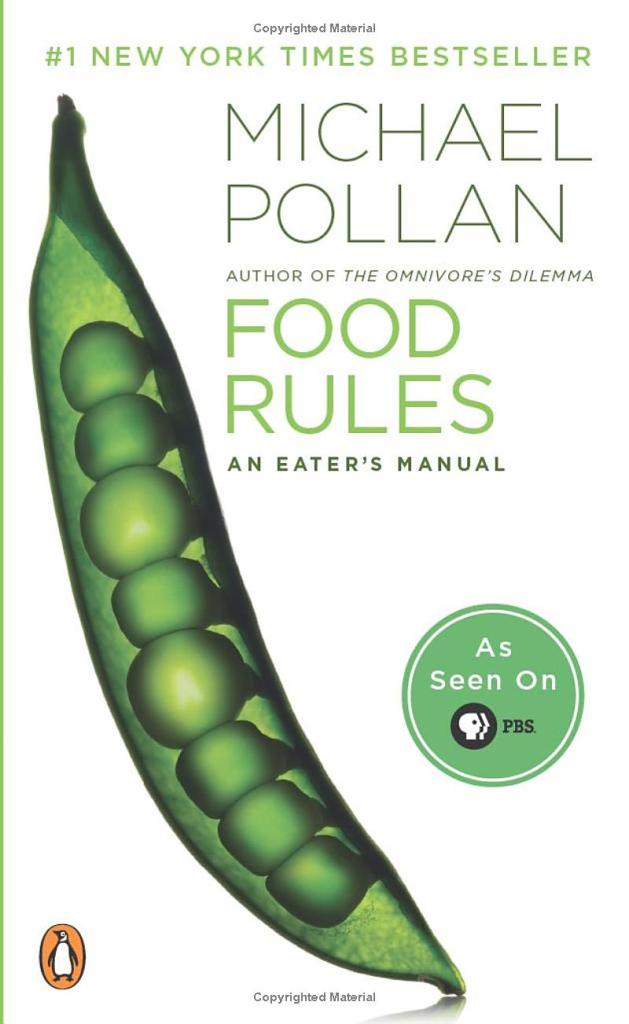
Food Rules by Michael Pollan 2009
Eat food. Mostly plants. Not too much.
Those seven words are the result of Mr. Pollan’s extensive research into the question, What should I eat? He knew his publisher was expecting a little more, so he created this book that finds the science supporting mother’s and grandmother’s wisdom about food. Quick to read and easy to digest, this book is equal parts old time wisdom and research findings about food and how it effects us.
You will learn why you should ‘eat foods your great-grandmother recognizes as food.’ Or how to ‘eat your colors’. And the meaning of ‘the banquet is in the first bite.’ Or ‘hunger is the best sauce.’ Once you read this book, you will have the catchy phrases directing your shopping, prepping and eating. And as a result, have some healthier choices.
No recipes in this book. It’s only 140 pages.
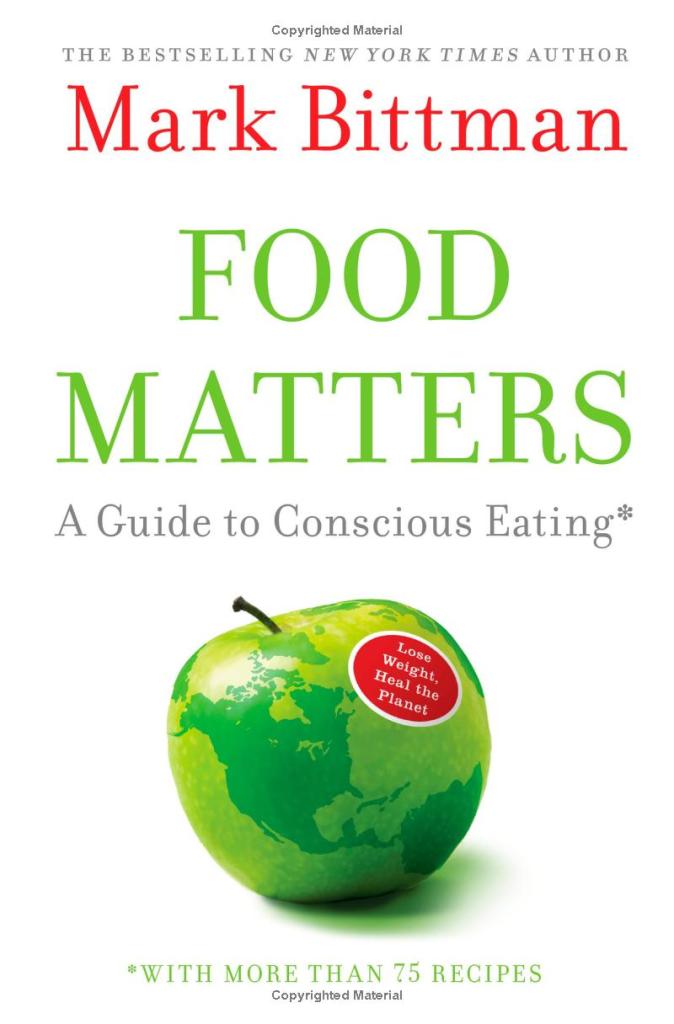
Food Matters: A Guide to Conscious Eating by Mark Bittman 2009
Mark Bittman is an advocate of culinary simplicity. He wants to make cooking simple enough that anyone will do it in their own kitchen. This book focuses more on weight loss and sustainability. That’s nice, but he also presents a very simple, healthy, budget-wise, disease-preventing way to eat for anybody. His ‘rules’ can be memorized in moments and you can implement his advice the same day you read it. One of them is to load half your plate with vegetables every time you eat. He asserts the guidelines he presents in this book will help you lose weight, reduce risk of chronic disease, save you money, and reduce global warming. He also claims this way of eating to be more effortless and pleasant than any diet on the market. And the icing on the cake? It will take little time and require no sacrifice.
Includes more than 75 recipes. In fact, over half the book is formulas and recipes for cooking and baking. The ingredients are very regular. I have used many of the recipes many times.
-Liz
P.S. As I am writing this, I am second guessing the whole idea of giving you book recommendation about food. Please don’t read this and imagine I eat exactly like any one of these books suggests. I don’t. I try to mince my words in case I have to eat them.
 So She Reads