

School is in full swing again! It is very cliche, but how did summer go so fast? We had a little over 3 months off, and just like that the mornings are crisp again and fall is just around the corner.

This summer Weston and I went to a CLE teacher training to get a better handle on what we are teaching in our schools. It was a lesson in fortitude for both of us! Every morning Mr. Hans would give us a lecture on the days topic. Topics included ‘A philosophy of Christian Education’, ‘Preparing to Teach’, ‘Interpersonal Relationships’, and ‘Managing the Classroom’. I took the elective workbook called ‘Administration’, also. Each of the lectures had corresponding workbooks (light units). There was reading at the beginning of every lesson that we were supposed to read, then do the work. After the hour long lecture, we were expected to spend the rest of the day filling in the workbooks. We had three and a half days to do this and it was a crunch to get it done. But we stuck with it and finished in time!
This meeting was in the Neepewa Manitoba area. We were the only Holdeman Mennonites there, but the entire group was almost exclusively Mennonites of some type. It was a very interesting experience and definitely expanded our horizons. We enjoyed our time there and learned some things about CLE and teaching in general.
“Teaching is what you do
Ifluencers are what you are.”
-Mr. Hans Neufeld
This is the quote that has stuck with me since our meeting. Our instructor was a young man from southern Ontario. I had great respect for him by the time our 3.5 days of class time were over. He talked about how teachers aren’t only teachers, but they influence children for life. These thoughts come from his lectures and the musings I have done since we got home.
More than any other part of school, the teacher’s life has the greatest influence upon the student. The life of the teacher has a greater influence on the life of the student that the teacher’s knowledge of the subject matter. Students will remember little of what a teacher says, more of what a teacher does, but mostly what a teacher is. The teacher’s most important impact is not intellectual but spiritual. Every teacher will influence his or her students spiritually, in either a negative or positive way. No teacher can hide his own spiritual convictions or lack of them. The teacher’s attitudes, conduct, and character will gradually mold those of the student.
If you don’t want to live in a fishbowl, please don’t aspire to be a teacher. Teachers are like celebrities. The spotlight follows them through town, church, youth group, and the community. I had a teacher friend tell me she could sneeze in her bedroom in the basement and the next day the neighbor would ask her how her cold is. This is true. It can be annoying to be in the limelight so much, but now that I’m a parent, I know why everyone is interested in the teachers. You have our most precious posssessions for 6.5 hours of the day for nine months. (And you may snag one or our youth boys.) It matters how you act!
Teachers as Influencers
Teacher: one whose occupation is to instruct
Inluencer: a person who aspires or guides the action of others
Just reading those two definitons it is easy to see how the two overlap. Following is a list of five things that make an influencer successful. I can guarantee if you follow this list in your teaching you will not only make a great teacher, but also be an influencer with the best possible outcome: happy students who are learning will under your guidance.
Influencers are very popular in today’s world. We see them everywhere. The idea of being an influencer really took off with Social Media, but that’s not the only place Influencers can work. We have them in our circles, also (WhatsApp statuses come to mind). There’s lots of ladies that are selling products for a company. Those ladies are being Influencers to the Holdeman Mennonite ladies. They try to convince (influence) you that their product is the best and will solve your problem! The trick with you being a successful buyer from an influencer is keeping your ability to do your own thinking. This is why it’s so important to get dedicated teachers. Children don’t have the ability to discern when an influencer isn’t being honest, although they can tell when we aren’t being authentic. They won’t be able to totally understand it because their brains aren’t fully developed, yet.
I did a quick search on what makes a successful influencer and came across this list of five things an influencer needs to do to have a following that buys into what they are promoting. This list carries straight over into the classroom. The easiest way to understand this is the fact that you are trying to teach your student how to do long division, but you are also trying to influence them to do neat work and be done in a timely manner. You explain to them that they need to keep busy to get their work done. You remind them they don’t want homework. All of the latter is influencing them. You may even use threats and bribes sometimes, but there are better ways. Read on to learn how to be a successful influencer in your students lives.
Authenticity
Children have a sixth sense for detecting insincerity. They know instinctively when words ring true.
If you’re teaching books, your students may not remember. If you’re teaching students they will remember.
-Bruce Wilkerson in The Seven Laws of the Learner
Being authentic is just being yourself. It is being true to who you are and not trying to be like others. This doesn’t mean that you don’t try to improve or change an approach in your teaching that needs a little help. There is nothing wrong with watching co-teachers and seeing a place you could improve. You will just do it in your own way.
I taught with a gal the first year of teaching and if I had tried to be like her I would have been exhausted by the end of my first day. She was high energy and loved to do things! My personality is more laid back (lazy?), but I did learn things from her. I learned that you can smile and laugh at yourself when you make mistakes. I learned to lead school programs from her. After twenty-one of them I still think of her when I’m in front of children leading. She was authentic and she influenced not only her students, but also me in the ways of being true blue.
Your students will know somehow if you are spending time in your books learning what you are teaching. You can fly by the seat of your pants occasionally, but it won’t work indefinitely. Eventually you will fall flat. Don’t ask me how I know this!! If you want your students to love studying, show them by your example that it is a fun thing to do. And when it’s not fun, show them by your example of sticking with it!
Being authentic also includes standing true to your convictions no matter the pressure you are under to act differently. It’s amazing the amount of pressure children can place on you to do something that you feel isn’t right for your classroom. This could be things as small as staying our longer at recess. If you feel that won’t be good for your children, stick to your guns!
Expert content creation
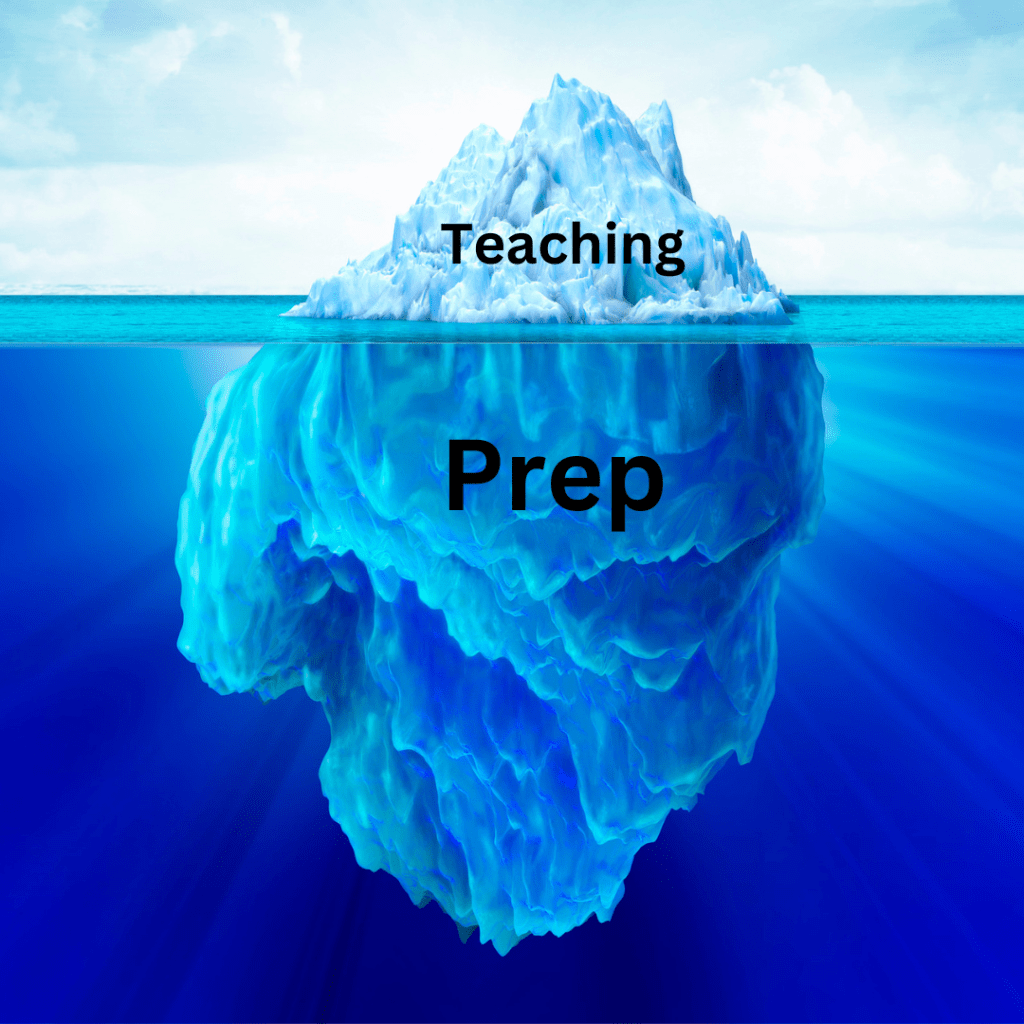
This one is huge, I know! It takes long after school hours to get your lesson plans made, lessons studied, and figure out a way to get that third grader to catch on to double digit multiplication.
One of the best ways to prepare for school is spending time there. Spend time quietly at your desk. Walk the halls. One teacher told me when he was having trouble with a child (behavior or academic) he would sit in the child’s desk and pray for him. That child can feel those prayers and you will get an answer. Spend time getting things in order in your head. Make a plan and do your best to stick to it. Having said that, flexibility is the best attribute a teacher can have!
One way to prepare is reading others experiences and advice. I have a love of books, so this one was easy for me, but if you want to be a successful teacher you also need to learn things. Read the Chalk Talk. Other good options for books to read:
The First Days of School by Harry Wong
The Power of our Words by Paula Denton
Seven Laws of the Learner by Bruce Wilkerson
Classroom Manual by Christian Light Education
Currciulum Manuals by the publisher (Don’t miss this one, ever!!)
When you read what others have written, take what you can and let the rest go. Don’t expect to be able to apply it all at once. Even this blog post!! I learned these things over nine years of teaching and ten years of being a mother added more understanding to what I learned as a teacher. One small nugget taken away is better than nothing. Don’t descredit small steps.
Content creation covers a lot of areas. It includes classroom decorations, of course. Make your room attractive and give your daydreamers something to learn as they peruse the walls. It covers the time you spend figuring out the structure you want in your classroom.
I love it when I go to school before the year begins and teachers tell me what they plan to do in their classrooms. Some tell me the rules (keep them simple!), others show me a story time book they want to read. One this year showed me a book of poems she is planning to have her students memorize out of. That’s the kind of content we are looking for!
Community management
You are a juggler. You are expected to have your ducks in a row at school, of course. Then there is living with (and getting along with) your co-teachers. Then there is the school board, a new youth group, new towns to learn, new church to go to. And somehow we expect you be authentic and just adjust to all of our ways. I truly understand how difficult that can all be. I did my share of crying and fuming when I was away teaching.
But, you do know how to eat an elephant, right? One bite at a time. Start with what you can control. That is what happens in your classroom. Come to school early enough before school even begins to study your books. When your decorations are up that’s when the real prep can begin. That’s when you can sit down and study books and figure out how you want your day to go. Get to school early enough on school mornings, too. One teacher we had was at school at 6:30 almost every morning. I respect that sort of dedication, but that’s about the time I was eating breakfast. I felt if I got there forty-five minutes before school started I was doing good.
Mr Hans told us he thinks our classrooms should be a bit like boot camp. Not that you are yelling at your students and humiliating them, but that they are SO FULL of structure that there isn’t room for disobedience. Structured environments bring peace to a classroom.
As far as the community outside of school, give it time. You don’t have to be best friends with your co-teachers. If they don’t seem quite normal to you, let them be. I think it is a tall order that we expect you to live together, teach together, go to youth together, go to town together.. and then we expect you to be great friends. It’s ok if you don’t see eye-to-eye. Be kind and considerate, work together on school related issues and let the rest go. You will find things that you can do together that will cover up the fact that you aren’t best friends. One year I taught with two girls that were friends before I showed up. I was worried about it but bided my time. All three of us loved to sing and that covered the fact that we weren’t all best friends. We sang together and let the rest go. (In an effort to be honest, that letting the rest go included some uncomfortable and unhappy times. It wasn’t all roses, but the singing together did truly help!) A friendship with your co-teachers may sneak up on you if you are not forcing it.
Keep an open mind to ‘family’ that is waiting for you. I believe God has prepared someone for you before you even got to your new home. It may not be the type of people you were with at home, but that’s part of the fun. You get to learn about the new congregation through the eyes of people who are different than you. There were two families the first year I taught school that helped me more than they will ever know. I felt like I could say anything to them and they didn’t get defensive about the ways or people I was talking about. They would just explaing to me why they did what they did. Sometimes they would just shrug and say “that’s how we do it at West Point”. Basically, get over it. We need those people in our lives, too. These are the people that are influencing you. Be open to that influence, it will make your stay easier.
Trust
Every point I come to on this list seems like the most important one. This may be at the top of the list. When you have children’s trust that is truly humbling. Who are you that these small souls believe in you?!
Gaining trust takes time. The best way is by following through on what you say. That sounds simple, but it usually works. This can start with your list of classroom rules. Don’t let them get by with disobeying those rules. They will get the feeling that you don’t mean what you say. ‘She has a list up, but we can do what we want to. What does she mean?’ The students may not always like this trust building process, but it will make them feel secure.
You may not always like the trust building process either, but it is well worth the discomfort it causes. There will be times that you will need to go back to your students and apologize for something you said or did. Sometimes it may be to individuals, sometimes to the entire class. It’s well worth keeping this line of communication open, even though it’s not fun. This is the ultimate in influencing your students for good. They will squirm a bit when you talk to them on such a personal level, but imaging the building blocks you are giving them!
One apology stand out in my mind. It was hockey season. Anyone that plays hockey knows how mad you can get in that game. It gets peoples ire up. The season was nearly over and I was sick and tired of playing hockey. The gear, the attitudes, the almost ruined rink. It was time to be done. Everyone was angry. I tried to help them out by giving really good advice on staying cool, keeping the puck on the ice and keeping sticks off of everyone else’s shins. One night I realized that I was very angry during hockey. The next day we had a huddle and I apologized. They all knew I was part of the problem, but were nice enough not to say anything. Later that day, I saw my most hotheaded player raise his stick, ready for a real shot. He realized that it was going to be a problem and he dropped his stick and relaxed his shot. At that point, the apology was totally worth the discomfort it caused me. A good example had influenced him in the right way.
One way to build trust is to be friendly. That sounds overly simple, but it is true. One teacher told me he always smiles when he is reprimanding his students so they know he isn’t angry and they also realize he doesn’t need to get angry before they need to listen to him. One example he cited was about a little girl that liked to zig-zag between desks on her way to the trash or chalkboard. One day he smilingly asked her if there was construction on her road. He said she got the point and kept to a straight path after that. Obviously, she had learned that when he said something he meant it. Hinting worked this time!
I taught mostly upper grades in my years of teaching and along with that comes more of a challenge to gain and keep trust. One year I had four boys that were rowdy, but fun. Just for the record, I liked the naughty students a lot! You could really tell with them when you had gotten through to them Anyway, these four boys were pretty talkative in the bathroom. I could tell it was getting out of hand. Since they weren’t listening to my suggestions to be quiet in there and get out I knew something more needed to be done. I wondered what to do and since I couldn’t go in there to set things straight, I had them write 250 word essays on being quiet. They were sheepish, but did it. I think it helped 🙂 (Even if it didn’t totally solve the problem it helped me a lot! My frustration was lessened. That is one thing discipline does. It’s not only for the students. It helps keep you feeling in control and better about situations.) I still have those essays and read them when I come across them. Those same boys are now married with children. They are song leaders, hard workers, they are at work days, have ideas when things need to be fixed or changed. I am humbled and blessed by seeing those boys and remembering my very small part in their upbringing. (If you boys happen to read this… Those were good days!! The years in your school were my best years teaching, to be honest!)
Passion
“Strong and barely controllable emotion”
Here is what passion looks like:
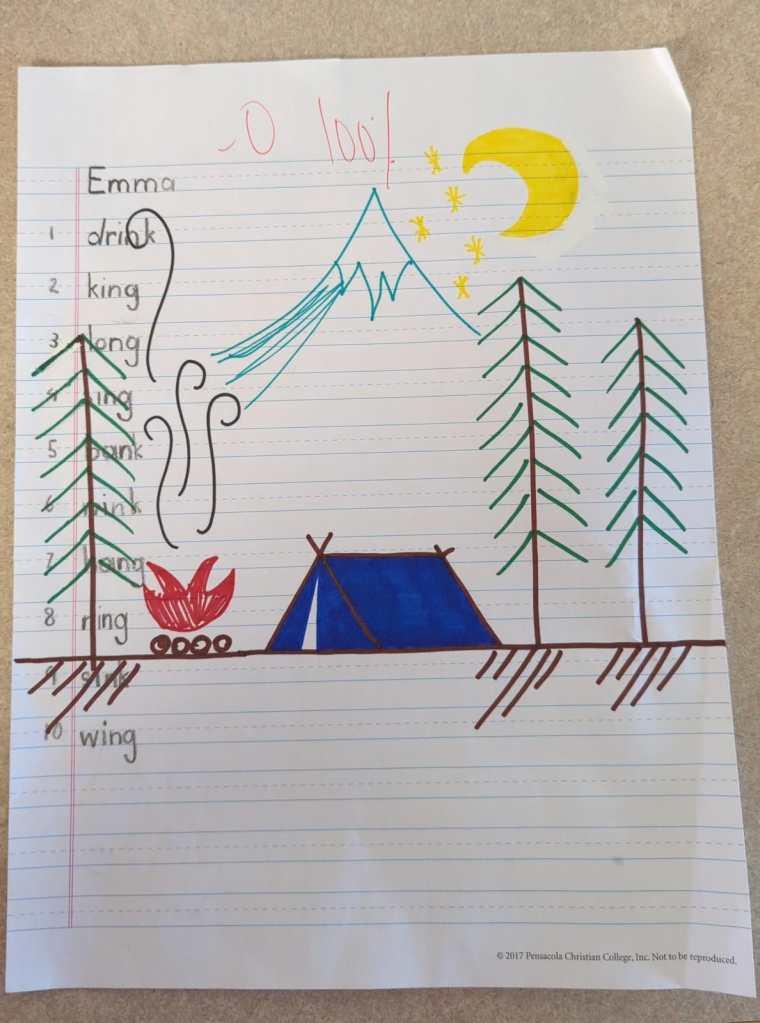
It also looks like this:
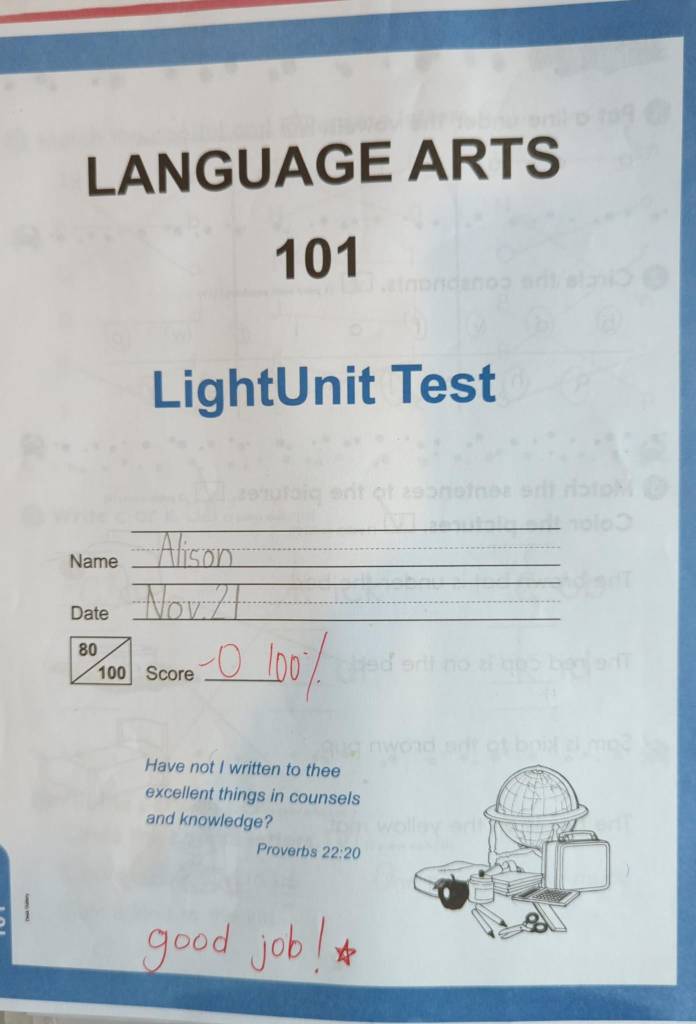
Both of these are good examples of a way to write the grade on a paper. Who cares if you aren’t an artist? Your passion will come out in different ways.
We take CLE in our school for the 3 R’s. It always makes me a bit nervous when we get new teachers that have never taught it before. There are some key differences from other styles of learning that can make the transition difficult if an open mind isn’t kept. I talked to a new teacher one year and she was totally enthused to be learning a new method of teaching. I came away from that meeting with my ears ringing with her words: ‘I’m gong to learn about CLE and learn to teach it! I love to learn new things!’ I told her some key points to watch out for and she was so enthused to have some guidance and a small explanation before she started. That is the type of teachers we need. She understood that the curriculum isn’t what teaches students. That is her job and she knew it! Let her passionate attitude influence you when hard things come up.
(Curriculum is my passion! I love my job as the curriculum agent. I get to order the books and open all those boxes of new books in the summer. I’m the first one to handle them. One of my daughters was helping me at school this summer and she put a book up to her face and inhaled deeply. She said, “I just love the smell of new books!” Me too, Alison, me too!!)
One teacher had a child that struggled with reading. She came up with a plan to help this child. She worked with the mom and they did remedial work at home. The teacher told me by the end of the year this child was reading almost up with the rest of her class.
A lot of times passion could look like hard work. One year I did an incentive where the students worked against themselves. I turned my bulletin board into a Monopoly board and we played classroom Monopoly for a few months. When all the students had reached the goals that had been set we had lunch together at one of the grandparent’s house that was close to school. One of the moms helped me organize and make a Monopoly themed mystery lunch. It was so much fun for me (I think the students enjoyed it, too), but it was a lot of work, too.
How to apply this!
This is a lot to let soak in. Applying all of this at one time could be overwhelming. An influencer isn’t born overnight. Neither is a teacher. Both influencer and teacher will learn through an open mind and being able to back up when making mistakes.
Chin up, dear teacher. It makes no difference if you are brand new teacher or have taught many years. You can learn to be an influencer for good in the school God placed you.

-Eva
 So She Reads
6 responses to “Teachers are Influencers”
Spot on Eva!! Good food for thought for all teachers, music included 😁brings back lots of memories, good ones and ones I’d like a redo on..
Thanks Merilee 😁. Weren’t those the days?!
Loved this!
Thank you, Debbie 💚
I’ve thought of this post different times since I read it. Great advice and thoughts. It makes me want to get back into teaching to see where I could improve. 🙂 (I feel that pull every August when buying my children’s school things!) Courage to the new generation of teachers.
I feel that same pull! I love school supplies ☺️