
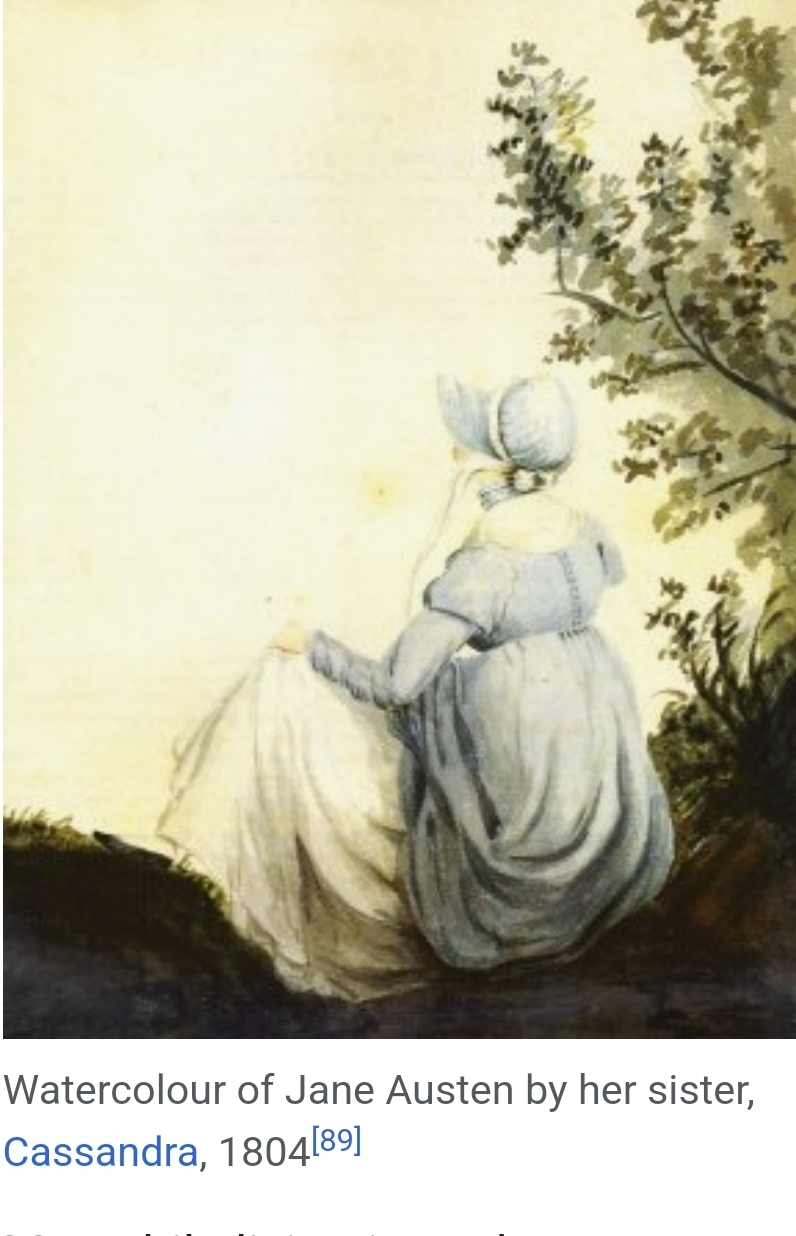
Jane Austen (1775-1817) was an English novel writer. You can read Austen’s books as witty romances or insightful commentary on the social classes and materialistic society of Georgian England. No novel written since her time is exempt from her influence. Jane’s books have rarely been out of print since their first publication dates.
George Austen, Jane’s father, came from an old wealthy family of wool merchants. In the class system, the eldest son inherited everything and since George was not the eldest, his branch of the family fell into poverty. Eventually, he was orphaned and taken in by more prosperous relatives. At 16 he went to school at St. John’s, Oxford, where he met Cassandra Leigh.
Cassandra, Jane’s mother, was from the prominent Leigh family and grew up among gentry. Her father was rector at All Soul’s College, Oxford. They got engaged about 1763 and exchanged miniatures. Cassandra agreed to marry below her station and there is never any hint that she regretted it.
George and Cassandra were married 26 April 1764, at St. Swithin’s Church, Bath.
Jane’s parents recieved a living of Steventon Parish from Thomas Knight, the wealthy husband of George’s second cousin. Later his Uncle Frances purchased the Deane rectory for them. George spent his life and made his living as a member of the clergy. Mr. Austen supplemented his income with farming, teaching several boys at a time, who boarded in their home. Their annual income was £200, which placed them in the center of middle class.
Jane was born to George and Cassandra Austen 16 December 1775 in Steventon, Hampshire, England. She had one older sister, Cassandra, five older brothers and one younger brother.

Above is a picture of the home Jane grew up in as a preacher’s daughter, with many siblings. Jane attended church, went dancing, and wrote stories to entertain herself and her family. Jane and Cassandra went to Oxford for a short time in 1783. They were sent home with typhus and Jane nearly died. (Typhus is caused by crowding and poor sanitation and causes fever, headaches and rash.)
As she recovered from typhus, Jane was taught at home. She was encouraged to read by her father and brothers. With unlimited access to her father’s library, and the library of Warren Hastings, a neighbor and family friend, she was supplied with a large and varied amount of reading material. This was unusual for her day, as girls too educated were not as marriagable. Her father provided generously with paper and pens for drawing and, the more risque, writing, that Jane was fond of. In 1785, Jane and her sister, Cassandra attended Reading Abbey Girls School. The curriculum likely consisted of French, spelling, needlework, dancing, music and drama. They returned home before December 1786, as the fees became too high for the Austen family.
Jane continuted to entertained herself with writing stories and reading them to the family in the evenings.
In December 1795 Jane met Tom LeFroy when he visited Steventon. He had finished university and was moving to London to be a barrister (lawyer). They were genuinely attracted to each other, but LeFroy’s family intervened and sent him away. Marriage was too impractical between them as there was no money on either side. Jane never saw him again, but mentioned having tea with his relatives in a letter to Cassandra. No suitor measured up after that.
By the time Jane was twenty-three, she had completed three manuscripts: Northanger Abbey, Sense and Sensibility, and Pride and Prejudice. Jane’s characters ( and her commentary on them) are wry, sarcastic, and witty. Her heroines are plucky for that time. Much of the dialogue is ironic; her characters say one thing and mean another. On the surface, not much happens in her stories, yet she is making a statement about the materialistic system that left women uncared for in Georgian England. Her heroines employed their wit and pluck to gain marriages of love without sacrificing material prospects.
In 1800 George Austen retired from the ministry and said the family would move to Bath. Neither Jane nor Cassandra were provided for and maybe he thought there would be a better chance of finding husbands for them in the city. Bath was a popular place to see and be seen. Jane was dismayed to be moving fifty miles from all she had known. Some say she was depressed and she did not like living in Bath. Other historians say she was traveling too much to write. During this time, two of her books sold but were not published.
Jane accepted a proposal from Harris Biggs-Wither one evening in December of 1802. The two had known each other since childhood and the match would have offered practical advantages to Jane’s family. He was heir to estates in the area where Jane had grown up. By marrying him, Jane could give her parents a comfortable old age. But Harris was aggressive and almost tactless in conversation. By morning, she knew she had made a mistake and rescinded her agreement.
Jane’s father died in Bath 21 January 1805. This may be another reason Jane did not do a lot of writing during their stay in Bath. Her personal situation was painfully like her characters, as Jane, Cassandra and her mother were in precarious financial distress. Several of her brothers pledged annual contributions to support them. They spent some of the time living at their brothers estates and visiting other branches of the family.

In early 1809, Jane’s brother, Edward, offered the three women the use of a large cottage in Chawton Village (pictured above). This was part of Edward’s estate, Godmersham Park in Kent (pictured below). On 7 July 1809 the Austen women moved to Chawton Cottage and away from social activities. This home was not as nice as they had been used to. Edward supplied them with a couple servants, much to their relief and gratitude. They kept busy with housekeeping, working with the poor, and teaching village children to read and write.

During this time, Jane’s mother and sister gave Jane all the time they could to write. Jane was given two jobs – make the toast at breakfast and keep the key to the wine and tea cupboard. She wrote at a small table and chair in the drawing room and used small pieces of paper that were easy to conceal. Legend has it the door to the drawing room creaked and Jane never oiled it so she would be forewarned of visitors. Writing letters was a respectable activity for ladies and she could always exchange the novel page for a letter.
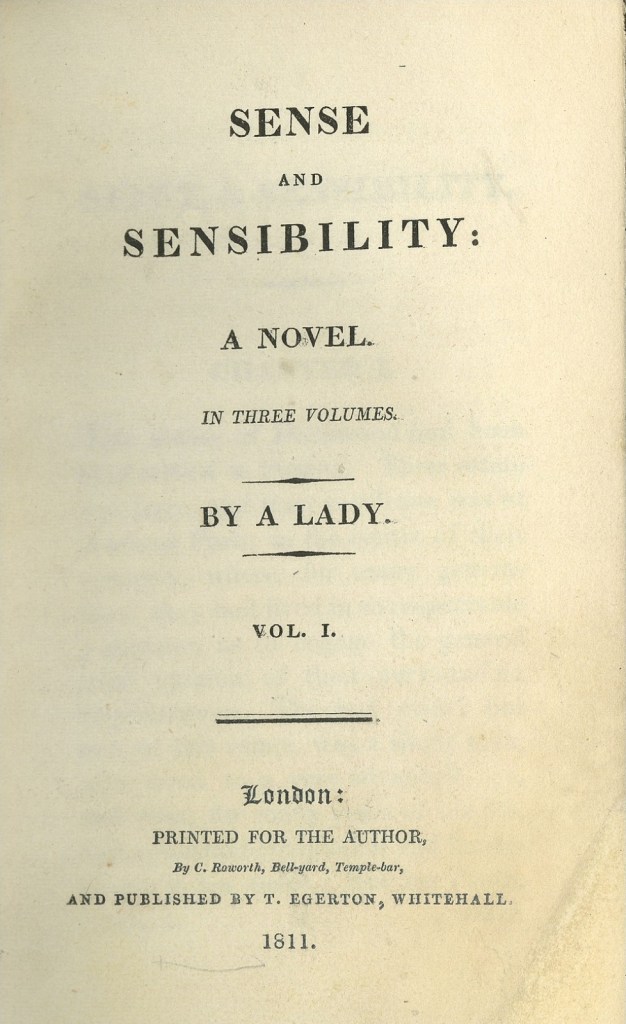
Between 1811 and 1816, four of Jane’s books were published. The title page of Sense and Sensibility said “Written by A Lady.” The following books said they were written “By the Author of Sense and Sensibility“. The Austen ladies gained a little financial benefit from the sales of these books.
Early in 1816, a painful illness developed. Some think it was Addison’s disease and others Hodgkins Lymphoma. Jane was working on rewriting Persuasion, finishing in August of 1816. Then she started Sanditon, completing twelve chapters before stopping in March, 1817, possibly due to her illness. Five days after abandoning the novel, she wrote of herself living “chiefly on the sofa.” In May her brother, Henry and sister, Cassandra brought her to Winchester in hopes of medical treatment. She died there on 18 July, 1817, at the age of 41.
Jane’s favorite brother, Henry, was a clergyman like their father and had connections to Winchester Cathedral, finding a burial plot for Jane on the north aisle of the nave. James wrote her epitaph.

Henry Austen sent Northanger Abbey and Persuasion to the publisher and they were ready for the public 20 December, 1817. The two novels were bound in one volume and had a Biographical Notice written by himself, identifying Jane as the author. Cassandra burned many of Jane’s letters, which historians continue to speculate about.
Chawton House has been turned into the Jane Austen Museum. Next time you are in England, you can take a tour. You can take a virtual tour here.
Some Context for Jane’s Accomplishments
I read four Austen books in April. In the process, I learned some things about book publishing and social classes in early 1800’s England.
To give you an idea of how new the novel was in the early 1800’s, here are some statistics.
In 1811, when Sense and Sensibility was published, possibly just over 20 new books were available in all of Europe. ( here on Wikepedia)
By 2021 estimates, there are between 500,000 and 1 million books published annually from traditional publishers in the United States. Another estimation is that a new book is published every 8 seconds. That does not include self-published books, which is basically how Jane published hers.
Jane’s writing was completely different than anyone had read before. She pioneered the novel form by combining complex characters with a compelling story. Non- fiction and poetry were popular; Gothic novels were just getting to be mainstream, yet novels of any sort were considered a lesser form of literature. People were reluctant to admit they read them, for fear of other’s opinions.
The social classes were based on land ownership and wealth. In the upper class society of aristocracy, nobility and landed gentry, marriages were the means of adding to wealth, land or status. Thus girls were brought up to be marriagable and there was a fairly narrow window of about ten years where they were ‘on the market’, as it were. Most girls submitted to this system.
These ladies didn’t have much to do. There were servants for housework and even wet nurses to feed the babies. They were left to write letters, socialize, go walking and speculate on potential matches between the eligible bachelors and marriagable ladies. They were mostly in the business of killing time. What was an intelligent woman to do? Writing novels was not considered ladylike. Getting a job and working for your living was out of the question. If hard pressed, an upper class lady could be a teacher or governess in another wealthy family. This option was undesirable and dropped her value in the marriage market. It appears that it was important to maintain an appearance of wealth, at the very least.
The middle class consisted of professionals, merchants, and skilled tradespeople. Doctors, lawyers and clergy, who feature prominently in Austen novels were in this group. Many women (by secret or open means) were trying to move up to the next social class. In some cases, success meant survival, as poverty was real.
The lower class was the remaining workers in agriculture, factories and manual laborers. Vagrants and paupers were also in this class. Understanding this system and the ways people contrived to “marry up” adds much to catching the humor of some, and depravity of other characters in Austen books.
Jane’s characters did not so much disregard the system, as find ways around it by holding out for true love. Or not marrying at all, which was the option Jane chose.
In Jane’s books, having £5000 annually was an impressive living. This amount is approximately the purchasing power equivalent to $535,213 today.
Average life expectancy in 1800 England was around 40 years. Cassandra lived to be 72. Her six brothers lived to an average of 75.
Next week look for descriptions of each of Jane Austen’s books. I had a few questions while reading will try to answer them in the next post. Are her books still relevant today? How might they help young ladies build character?
–Liz
More Classic Reviews
 So She Reads
2 responses to “Author Spotlight: Jane Austen”
I appreciate the effort you put into this post! Austen is a comfort read for me—her clever turns of phrase and thought provoking aphorisms make for such satisfying reads. Looking forward to next week!
Hi Cathy, I enjoyed learning about this author. Her books and her life were so similar. Thanks for reading! Liz