
After reading several books lately that didn’t offer much, I was disillusioned. After abandoning books half way through, I was afraid I’d have nothing to review here. To fix this, I made a goal to read better books.
I decided to start by reading twenty pages and stopping to consider if I want to continue. If not certain the effort will be worth it, I give myself permission to quit so I don’t waste any reading time.
Quality books makes me think of classics. I had been gravitating toward more classics lately anyway. In the winter I read four Jane Austen books. In spring I read The Count of Monte Cristo with a group of readers for additional support and accountability. I wasn’t expecting to like it, but I did. In summer, while picking raspberries and weeding, I listened to Don Quixote. This was on the recommendation of the book The Well-Educated Mind by Susan Wise Bauer.
I picked up The Well-Educated Mind on a whim. It is an extensive course in self-education through classic novels, autobiographies, histories, drama, and poetry, and was a bigt more intense than I was willing for. Some of the books suggested I had already read, so I took up the next one that I hadn’t read: Don Quixote. After that is The Scarlet Letter. One reviewer said it was like shooting yourself in the foot. Another advised not to read it by yourself but in a group so you could discuss it. I decided to skip it for now and instead read The Woman in White.
I’ve read some other types of books in between, but I had started to compare them to the classics. And frankly, a lot of books don’t compare.
I really feel like the quality of my reading is better, but it comes with a price.

The Cost of Reading Classics
- Classics are old which is the same as boring and irrelevant isn’t it?
- They are complicated. It is taxing to follow a large cast of characters and process their motives and desires.
- I need a dictionary. It feels above my head.
- Classics raise uncomfortable questions.
- There’s so many, I feel behind already.
Let’s look at this list again. Every one of these cons is also a pro.
- Classics have endured for decades or centuries. That says something for quality, doesn’t it?
- This is a deep dive into human experiences, not short clips of sensation.
- By reading a bit above my head I’ll surely learn more. If it’s actually too hard, there’s abridged, retold, and annotated version to help.
- It’s like any other list of books—choose ones that sound interesting.
The price is worth the effort!
How You Can Read Classics
This isn’t complicated. Classics are not for special people. Classics are classics because each new generation discovers them and recommends them to the next. Read the classics like you would read anything else. Choose one that fits your mood, or on a topic you are curious about. Read one just because it happens to be on your bookshelf and you don’t have anything else to read right now.
But.
If you are going to the trouble to read a classic do yourself a favor and keep a few notes as you go. This helps remember the story and if you need a refresher, your words will quickly jog your memory. I am in the process of developing my own note system. I started making you a download to show how I do it, and in the process realized everyone needs to develop their own system. You can start with my ideas or use any ideas you have. You will get more returns on your effort if you have a system.
I write a short paragraph of whatever comes to mind after I finish the book. I want to know the date published and the nationality of the author. I like background too, like how many languages it’s been translated into, or never been out of print, or tidbits about what was going on in the world when it was written. Background is anything I find interesting about the creation of the book and it’s life after publication. And I usually write quotes that seemed worth keeping. I’d like to add a list of characters to my notes, but right now it feels laborious.
As an even simpler alternative, you can read cheap copies that you can underline and write in. This only requires a pen (or fun, colored highlighters) and no need for a complicated note system. Plus it’s interesting for those who read after you, or if you revisit the book later. You can keep track of characters on the end papers and give it stars or some other evalutation on the back page.
Another simple way to remember more of the books you read it to tell someone else about it. So if you’ld rather talk than write, that’s a great option.
And yet, even if you read the classics and take no notes is better than not reading them at all. So make this as easy as it need to be.
Remember any list of classics is just options. You are not expected or even supposed to read them all! Use the same judgement you would in selecting any book.
There are classics in every genre and subject and there’s classics you will love. Start with something that sounds interesting. Ease into it with a children’s classic or a short classic.
I used to think classics were dangerous books that were written by authors who were drunk or on dope. It’s true many authors didn’t live exemplary lives and their books were controversial in their day. (I’ve heard Shakespeare, Chekov, and Austen are the few authors with ‘normal’ lives. Maybe you want to start with them.) And we can learn how not to live by the characters and authors that made poor choices, too.
Pace yourself if the classic book is long. Slow down and befriend the characters. Don’t be in a hurry to ‘have read’. I have been reading The Woman in White since the middle of August and am only a quarter of the way through. There are many hours left and I had to return it on Libby. There was only one person after me so in two weeks I will pick up where I left off.
Be curious enough to go on rabbit trails. In some classics, there are blanks where names should be. Mrs. M— or Blankshire in 18— This was a technique to make it seem more ‘realistic’ to people not used to reading fiction by pretending to be writing about real people or places that the author doesn’t want to explicitly identify. Or maybe the author was using tact or avoiding liability. This has fallen out of style in favor of fictitious names. This tactic was used to make the books seem more “true” as people got used to the idea of novels.
Create a list of your own personal favorite classics. Keep them on a special shelf.
Listening to these books makes them a little easier, in my opinion. I’ve heard some readers express the opposite opinion, so check if it works for you.
You can be reading other books at the same time as you read a classic. Don’t make this harder than it needs to be. If you read more than one book at a time, the classic can be read druing specific times – say while driving or weeding, or if it’s a print book, read for ten minutes before bed.
You may not like every classic you read, but I guarantee you will have something to say about it.
The difference between good literature and a good read can be stated as this: you cannot stop reading a good read, and you cannot stop thinking about a good piece of literature after you finish reading it. -from an 8th grade CLE reading workbook
Classics are books which, the more we think we know them through hearsay, the more original, unexpected, and innovative we find them when we actually read them. -Italo Calvino
Fall Classics Recommendations
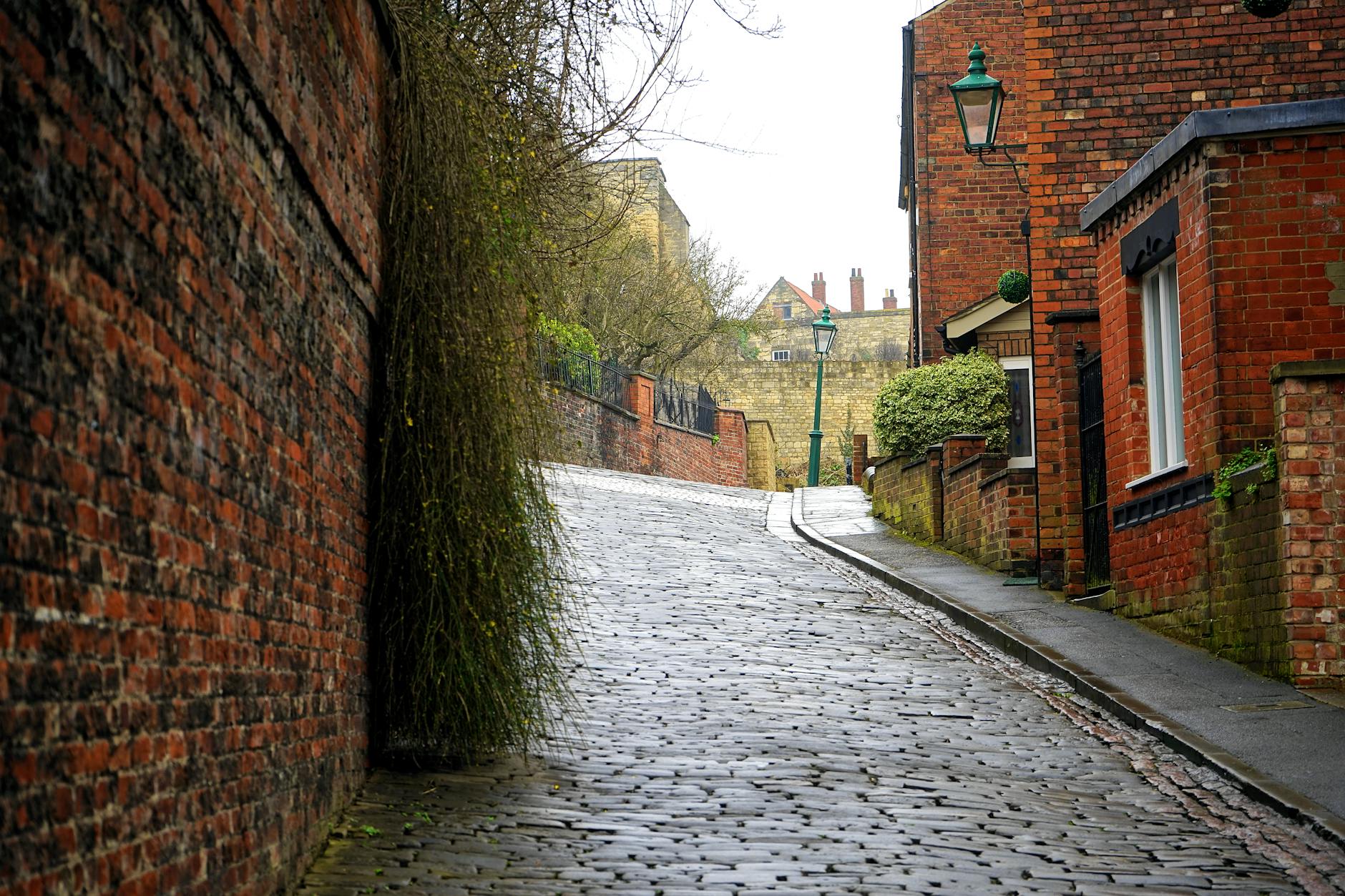
My criteria for a fall book: nostalgia, reflection, change, storms rolling in, rainy cobblestones, misty moors and foggy nights.
Persuasion by Jane Austen (review here) An understated heroine, who wins a second chance at love by her kind and patient strength.
The Woman in White by Wilkie Collins( currently listening to) Called the first mystery novel. Begins with a man walking on a lonely London road who meets a woman in white who had escaped from the insane asylum.
The House of the Seven Gables (review here) A slow build of impending doom, but nothing to keep you up at night. The bright spot of Phoebe, a country relative, brightens the darkness.
Jane Eyre by Charlotte Bronte (review here) A Victorian Gothic coming-of-age story about a tempestuous, revengeful child who learns to forgive and make her own choices.
Hound of the Baskervilles by Sir Arthur Conan Doyle (don’t think I’ve read this.) A Sherlock Holmes mystery with thrilling suspense and an atmospheric setting on the moors of England.
My Antonia by Willa Cather (read years ago) Nebraska pioneers in the 1880’s. Cather describes weather whether achingly beautiful or fearsomely dangerous, feelings and imprints of moments and the passage of time. My Antonia is a coming-of-age story, with tensions between the settlers and the nature of the place. Full of nostalgia, quiet reflection and friendship through the years. It’s part of a trilogy that can stand on it’s own.
The Witch of Blackbird Pond by Elizabeth George Speare (mentioned in this article) A story of the Salem witch trials told for children. Kit Tyler arrives in Connecticut Colony to stay with relatives. She feels caged in the stern Puritan community and befriends an old woman, not realizing she would then be accused of witchcraft.
Books are communication across centuries and cultures. I find this idea amazing!
 So She Reads
4 responses to “How You Can Read Classics”
Thanks for all this info. I have a very hard time finding a good read too. I don’t understand it. Some people are reading all the time and don’t seem to have trouble. Weird.
Hi Cindy! I am reading A Tree Grows in Brooklyn now. Slowly. Books with substance are more work but with more to remember and think about as you go along. It’s not for everyone but seems to be right for me now. I hope you have found something good to read in your quiet fall evenings!
I wasn’t exposed to many classics growing up, so I have made it a mission to read them as an adult. I agree, some of them are wordy or meandering. I find most of them a lot easier to listen to than to read. I don’t mind the wordy parts so much if I am listening while doing something with my hands.
I agree, too, that even though some of them are a little tough to get though, most of them are worth it.
Persuasion is my favorite of Jane Austen’s. Dickens is a favorite, though he’s not everyone’s cup of tea. A Tale of Two Cities is my favorite of his, though it took me a few tries before I could read all the way through it. But once I did, I immediately read it again. I also like his David Copperfield. I *loved* Les Miserables, though it was 1440+ pages with a lot of rabbit trails. I don’t usually recommend abridged books, but I think that would help in this case. The Yearling by Marjorie Kinnan Rawlings was so touching. Jane Eyre is another favorite. Others: Wives and Daughters and North and South by Elizabeth Gaskell, Amberwell and Summerhills by D. E. Stevenson, Doctor Thorne by Anthony Trollope, and Daniel Deronda by George Eliot.
A good podcast that helps with classics is Literary Life. They’re very long, though, about an hour and a half, so I don’t listen often. But when I did, they really added to what I got out of the book.
Hello, Barbara Harper. Thank you so much for your thoughtful comment. I have read all of Jane Austen but only one of Dickens entirely- A Christmas Carol. I’ve tried several others by him but I guess I need to try again! I haven’t even heard of some others you mentioned but will check them out. Thanks for sharing your recommendations. Liz