We miss so much because we don’t know the exact word to describe what we see.
I’m on a mission to notice and appreciate beauty. I heard recently that we only notice and talk about the things we have specific names for. You cannot talk about something if you don’t have a word for it. Since I have been sewing a lot (for me) since the new year, I got curious about pattern design names. And I wondered how they came to be. So here is what I learned. I only skirted the selvage of all the technical and specific words there are to know in the world of sewing. It’s exciting that there is so much more to learn, to experince and to enjoy.
You can only experience the world to the extent that you can name it. –Tristan from Tristan and the Classics
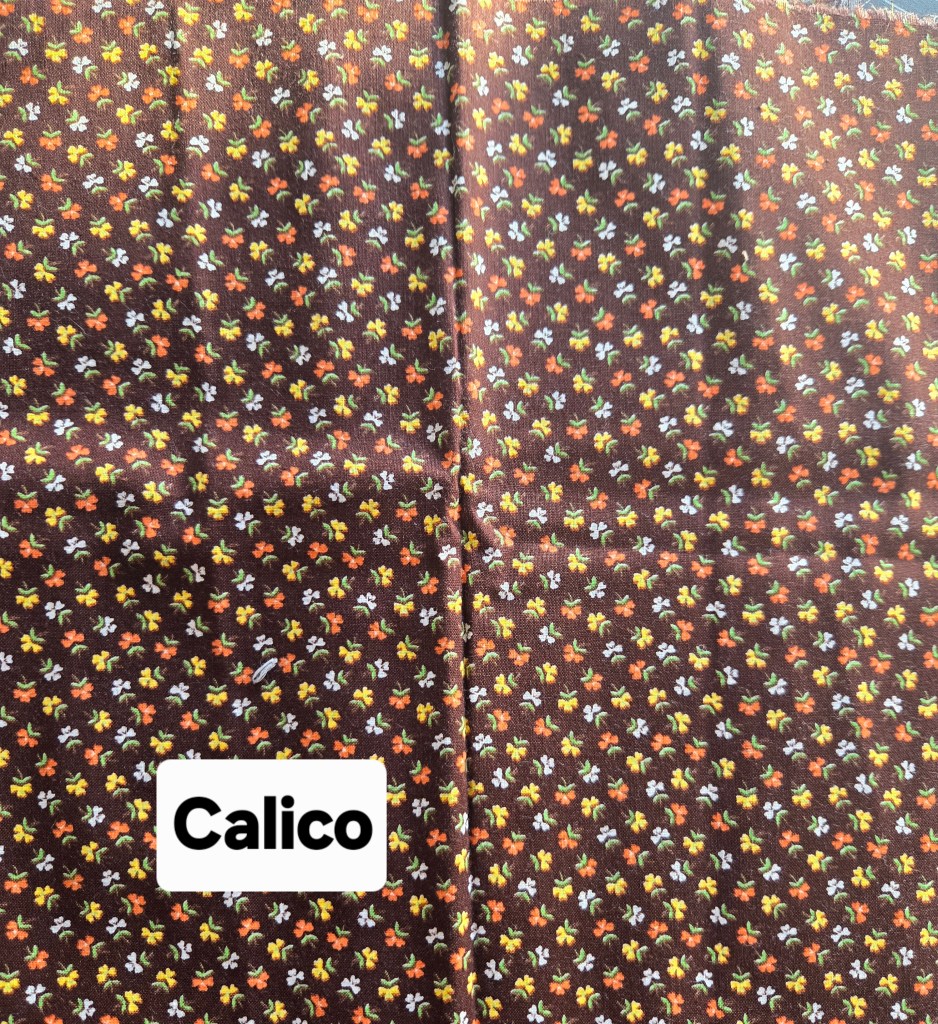
Calico
In the US, calico refers to a printed design on fabric. Calico is a small overall floral design printed on cotton fabric with a roller printer. It can also be called ditsy print. It was the least expensive fabric in the 1800’s and appealed to frontier women. With a stain-hiding design, washable and durable, it makes the ideal prairie dress.
Calico Balls were held by wealthy ladies in the big towns around the country in those days. A notice was put in the paper to come to the ball dressed in a calico dress and the next day the dress was sent to a charity for clothing the poor. In a newspaper article in 1855 in the Richmond Dispatch, the town’s wealthy were encouraged to ‘surrender all they held dear—their outward show of wealth—and instead show some pity for the poor. Men could also appear in domestic cloth and donate their toggery afterward.’ This was a boon to the local economy. Sales for calico rose, jobs were provided for seamstresses and caterers, and even the sales of ice went up. And the poor benefited, too.
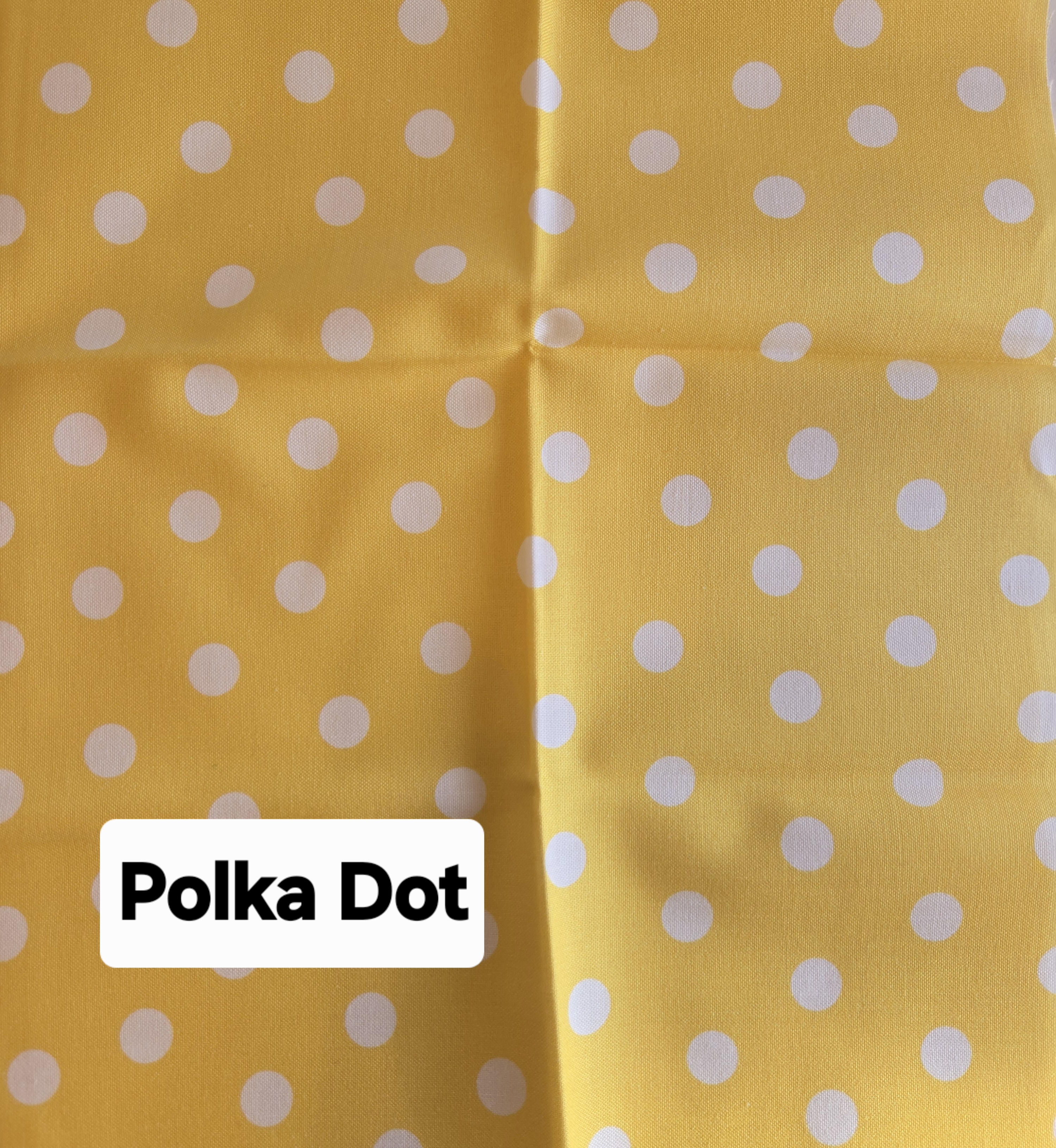
Polka Dot
The polka dot pattern comes from Medieval Europe and was not very popular when first introduced. It was associated with the plague.
Polka dot is a two color pattern with evenly spaced, filled circles of the same size on another color background. The size of the dots dials the casualness up or down and is usually associated with playful attire. Polka dots are used in folk art, toys, children’s clothes, bathing suits and lingerie.
Immigrants from Europe brought the polka dance with them to the United States. The pattern became popular for dance dresses, and sometimes the colors identified which polka club the wearer belonged to. From there polk dots sashayed it’s way to everyday wardrobes in the 1920’s.
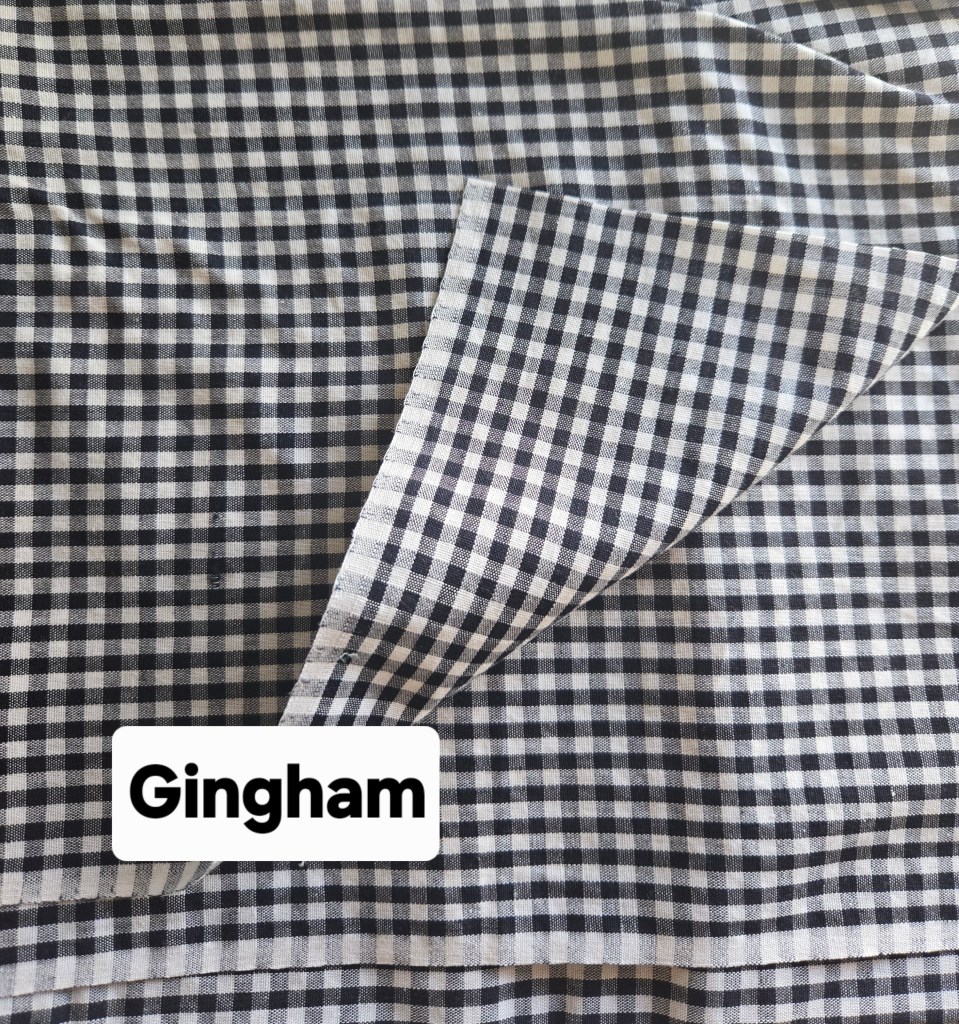
Gingham
Gingham is made from dyed yarns woven together in a reversible design. The design is small squares in alternating colors. This fabric was versatile, comfortable and easy to sew. It is still popular for tablecloths and aprons, shirts and dresses. The symetrical check pattern on gingham can be 1/8th to one inch in size, and comes in many colors.
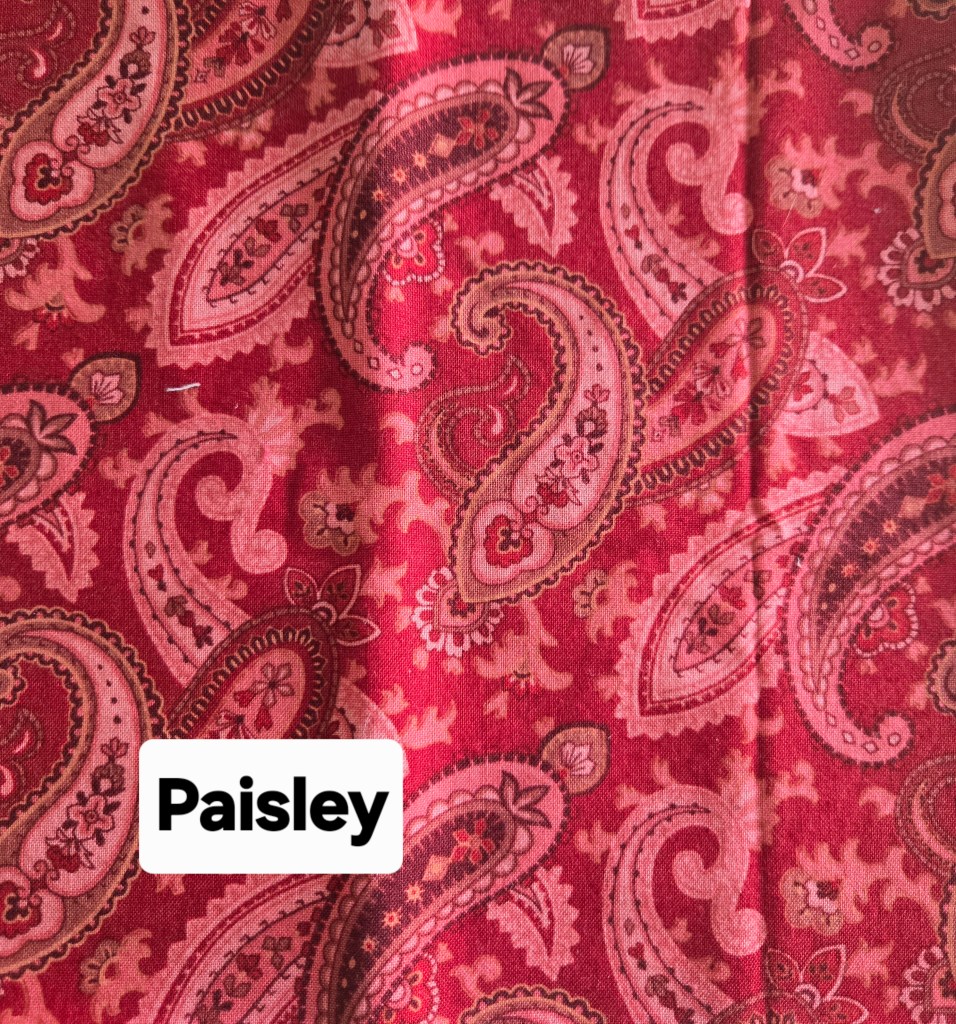
Paisley
Paisley is a teardrop shape with a curved end. The paisley pattern originated in Persia over two thousand years ago. It can symbolize life, fertility, eternity, freedom and resilience. It was made famous as a pattern on Indian kashmir shawls. Mass-produced imitations of these shawls were made in Paisley, Scotland in the 1800’s, hence the English name of the pattern. After shawls were no longer worn, the pattern continues to be popular on scarves, bandanas, and neckties.
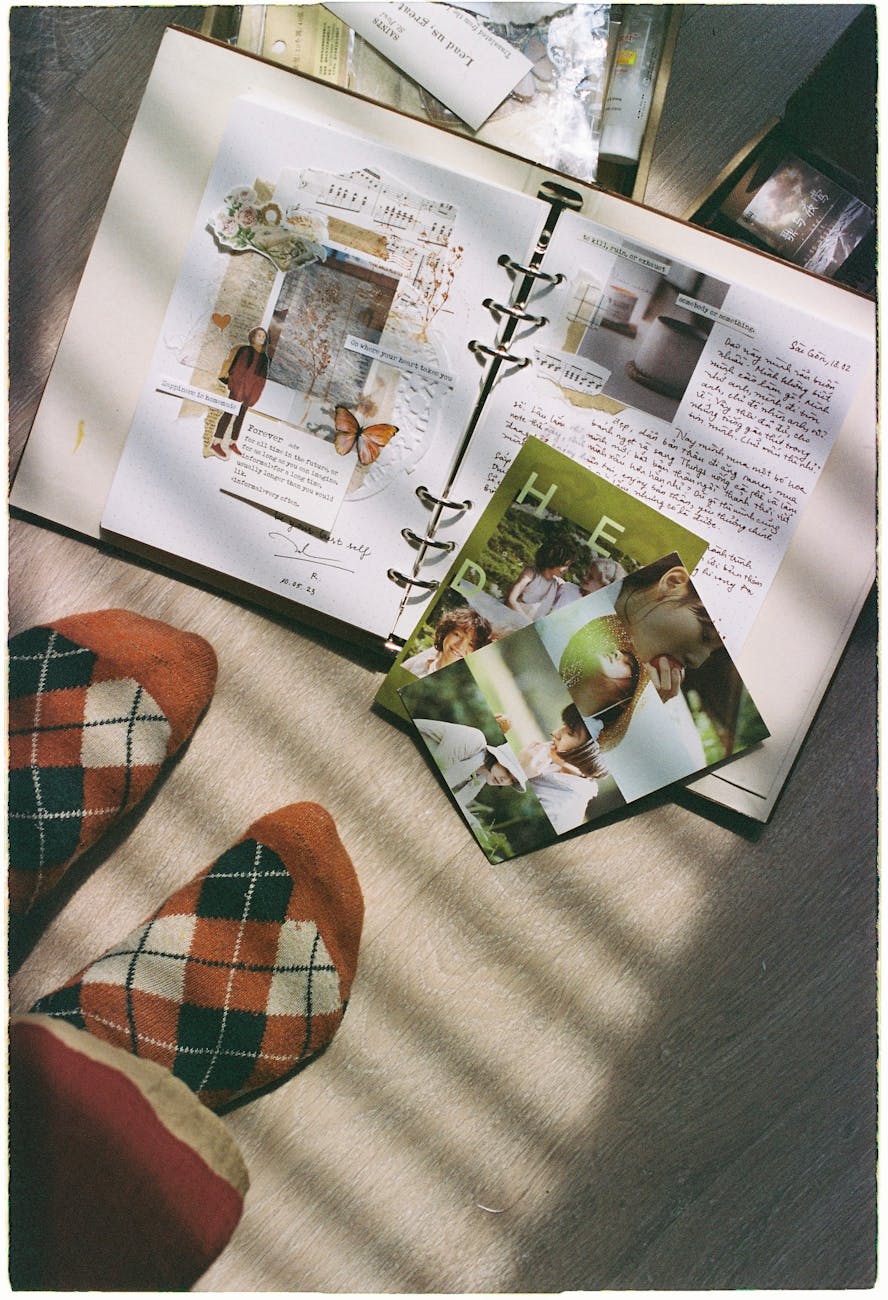
Argyle
The argyle pattern is overlapping diamonds with a line through them. This pattern can almost look three-dimensional or seem to suggest movement or texture. This pattern was the tartan of the Clan Campbell of Argyll of western Scotland in the 1600’s, mainly as the patterned socks worn by these highlanders. Scotland is also where the game of golf began and argyle and golf still seem to go together.
Argyle started to be seen in the US as knitwear after World War 1 and gained popularity in the 1930’s. It could be called ugly and is associated with a boring sport but because rich people could pull it off, argyle became a signal of wealth. It is popular now in a vintage way, probably cooler if your argyle vest is thrifted and once worn by an actual grandpa.
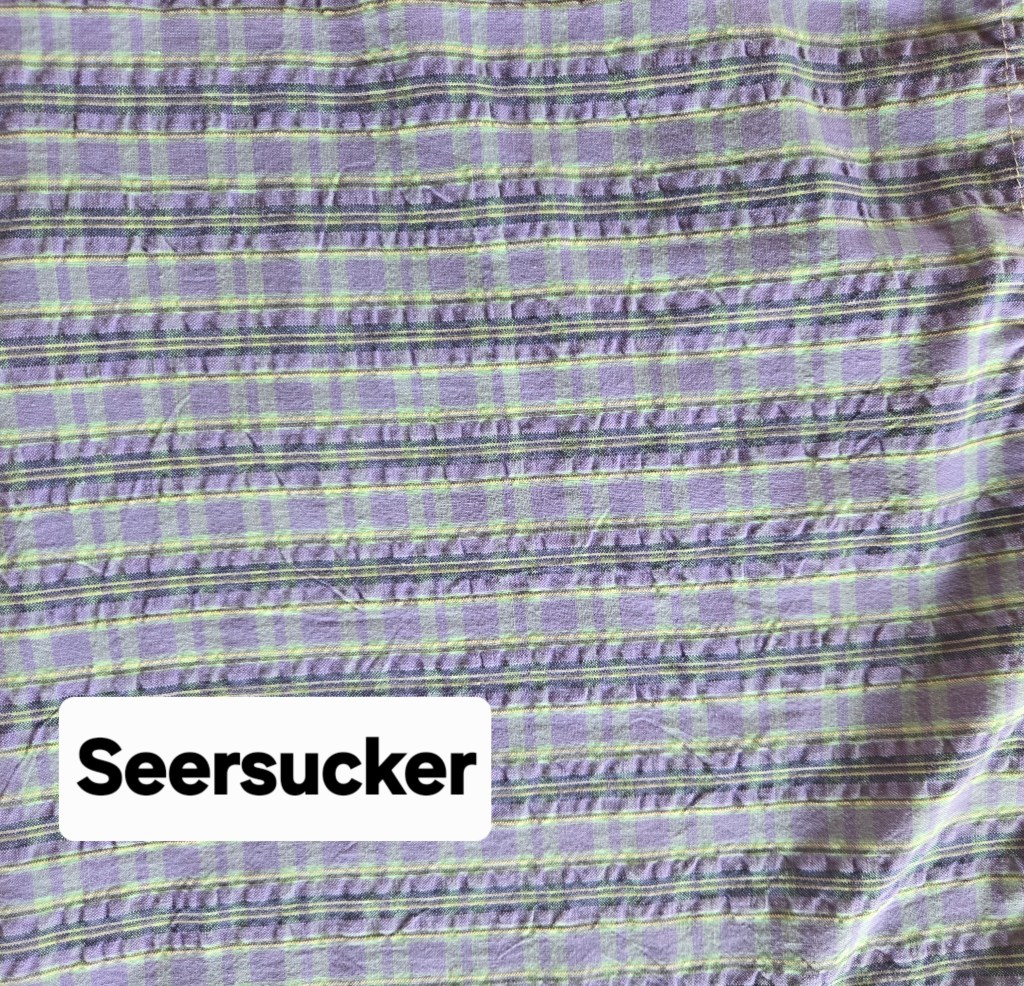
Seersucker
Seersucker fabric is woven with threads of alternating tensions. This creates a smooth strip of fabric next to a crinkled strip of fabric. Seersucker is especially ideal for hot climates. It looks cool and feels cool. It is made of 100% cotton, yet with no need to iron because of the bumpy strips from the slack-tension weave. Classic seersucker is two-toned—white and another color.
Seersucker originated in Persia and was called by the Persian word ‘shir-o-shaker,’ meaning milk and sugar. This is descriptive of the fabric’s smooth and bumpy stripes and the original colors of tan and white. When the fabric became popular in England the name changed to seersucker, possibly an anglicized version of the Persian name.
Seersucker was imported to the United States in the 1700’s and used for railroad workers’ clothing in the South. Once worn only by men, but later women shared in the relief from the heat. White and blue seersucker was very popular.
Seersucker broke protocol in 1903. Joseph G. Cannon appeared in front of President Roosevelt in a seersucker suit. He said it was just too hot for the dress code.

Houndstooth
A classic pattern, houndstooth is a two-tone, light-dark fabric traditionally woven from wool. It originated in the 1800’s in the Scottish lowlands as durable outerwear for shepherds. Another name is dogtooth. Traditionally, houndstooth is black and white but there are many variations and types of fabric available these days with the houndstooth pattern.
The pattern was obscure and humble until the 1930’s. Prince of Wales, Edward the Eighth took a fancy to it, using houndstooth for much of his daily wear. From there it has risen to haute couture. Want to make a great first impression? Try houndstooth!
More Patterns
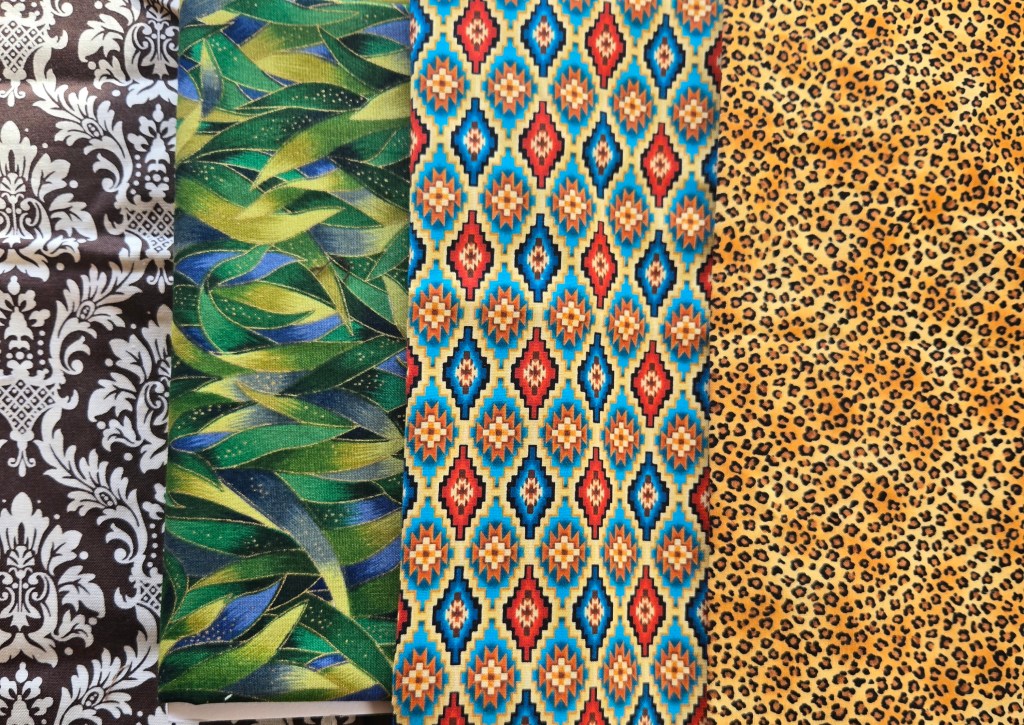
damask, botanical, native, leopard
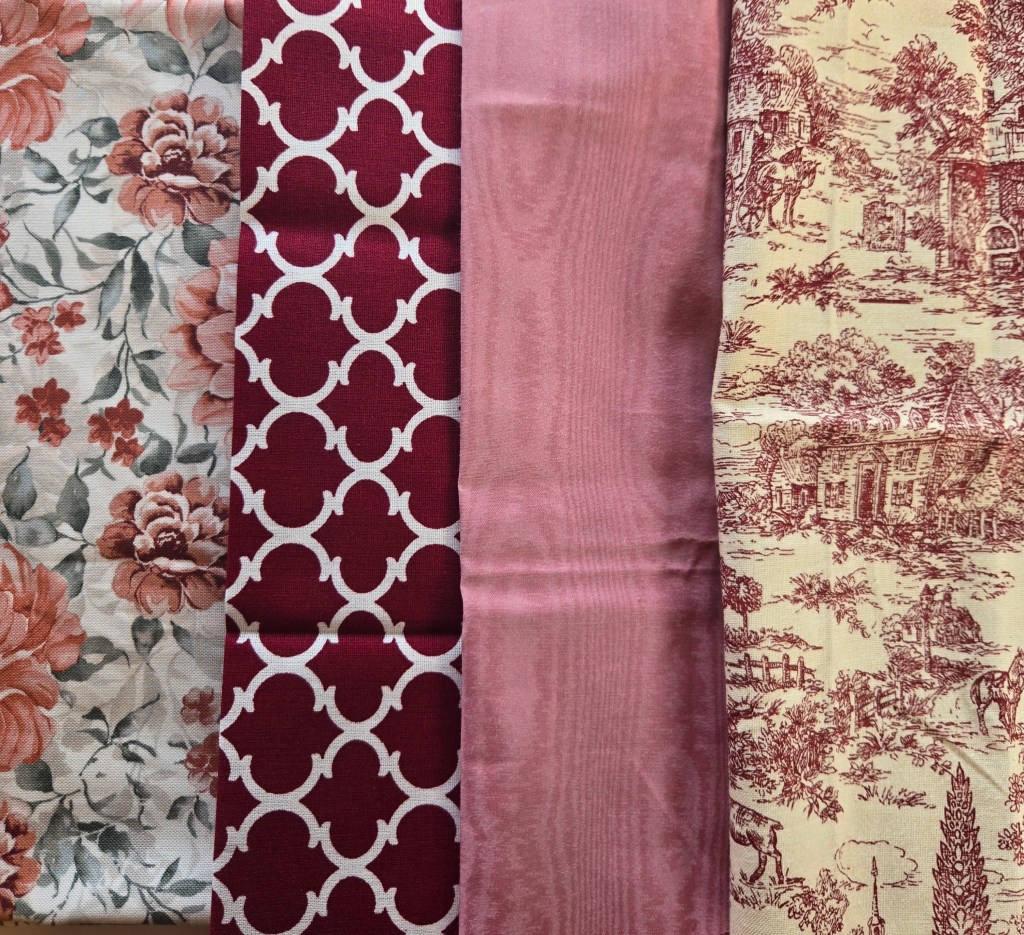
floral, quatrefoil, moire, toile du jouy,
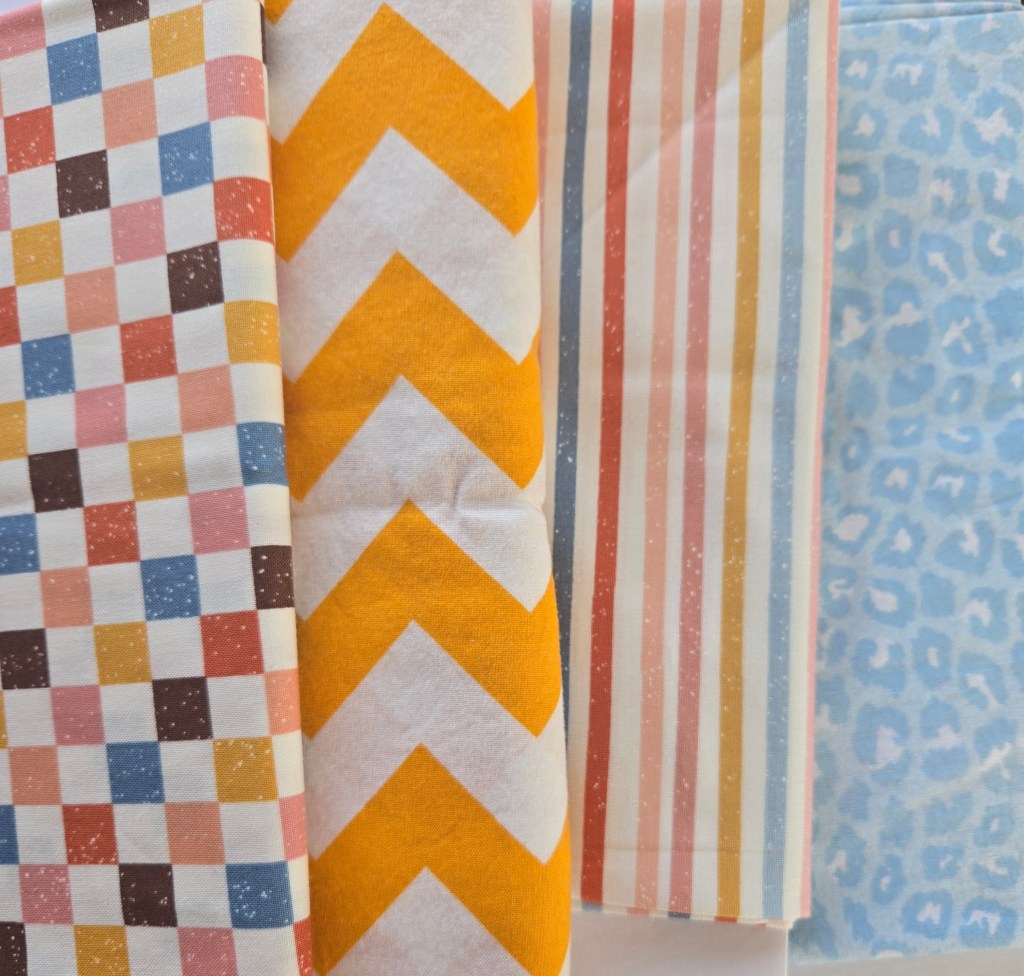
checks, chevron, stripes, leopard again
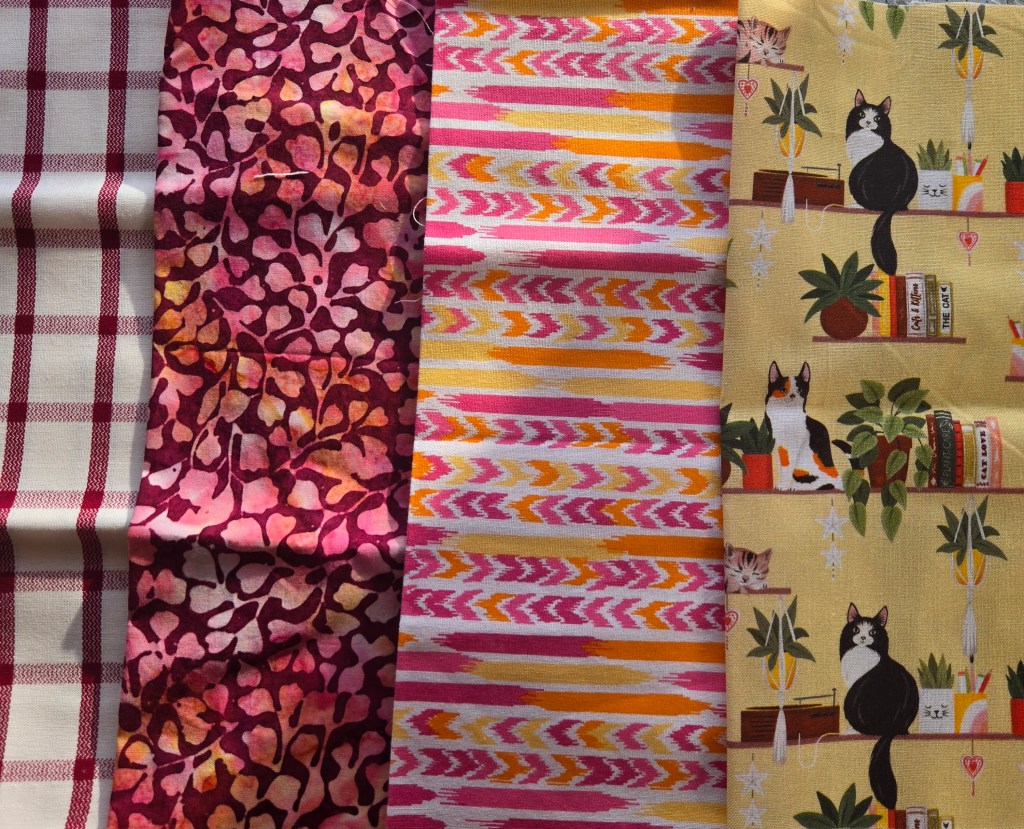
windowpane, batik (maybe), ikat, books and cats
Can you find the exact word to describe what you are wearing today? Or tell us about an obscure sewing term or tool so we can all appreciate it.
–Liz
All photos of fabric are from The Daisy Chain Crafter fabric stash.
 So She Reads
4 responses to “Pattern Language”
I enjoyed learning more about my favorite hobby!
What an interesting post! I was a Home Ec. Ed. major and worked in a fabric shop for a few years when I was first married. So I knew the names for most of these, though not the stories behind them. Funny true story: one time an older German (I think) couple came into the fabric shop asking for zigzag. I had no idea what they wanted. We looked at the trim aisle, and she saw the rickrack–that was it! Makes sense. 🙂
I’m wearing a knit dress with a black background and white flowers. My kids say it looks like those adult coloring pages and have threatened (teasing) to get out the markers. :-).
Hi Barbara, I love your description of your dress. I can picture it so well! Thank you! Yes, I only scratched the surface of all the different patterns and styles of fabric. And your customers looking for zigzag now have the satisfaction of knowing the right word!
I’m wearing bright calico – wanting spring! But it’s corduroy because it’s still winter 😄