
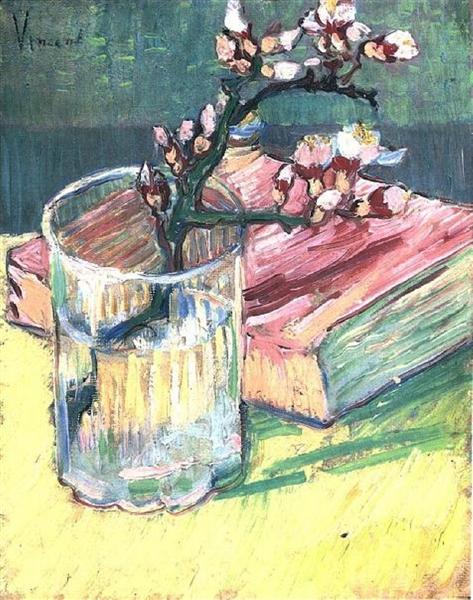
Vincent van Gogh, Blossoming Almond Branch in a Glass with a Book, 1888, oil on canves, Arles, France.
The reading in March has taken me from my armchair to Africa to Europe to Iowa. The time periods spanned hundreds of years from the early 1600’s to 1903. I know of no other hobby that has this much scope!
Rembrandt Is In The Wind: WOTY Book
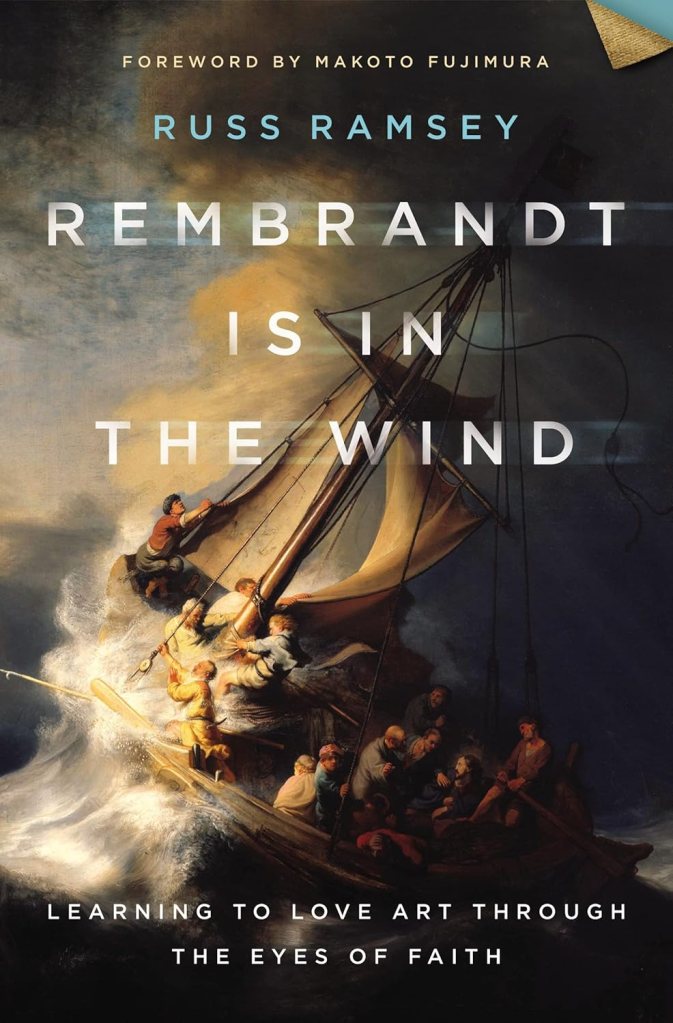
Rembrandt Is In The Wind, Russ Ramsey, 2022, 219 pages
“I can’t paint the way they want me to paint and they know that too. Of course you will say that I ought to be practical and out to try and paint the way they want me to paint. Well, I will tell you a secret. I have tried and tried very hard, but I can’t do it. I just can’t do it!” -Rembrandt
Rembrandt Is In The Wind is part art history, part art interpretation, part biography of artists. It also touches on psychology and faith.
This book tells the story of nine artists. Each chapter tells about his life, his art and his influence on others that came after him. Then the author makes connections and applications to our modern lives.
Many of these artist lived in a time when painting was a trade. It was a job that hopefully brought in a living. Wealthy people commissioned artists to paint portraits and churches asked for scenes from the Bible. These were used to remember ancestors or to help tell the Bible stories in church. The ones who commissioned the work needed to be satisfied with the quality of the work. Rembrandt was a ‘master’ even in his lifetime but he could not paint someone else’s vision. Neither can you or I.
I liked Henry O. Tanner – both his story and his art. Tanner did not bend to a black narrative, but made his choices like an artist, proving that it’s the quality of the art, not the color of his skin that made a difference. He lived a Christian life while painting scenes from scripture.
I really enjoyed the story of Josephine and Ed Hopper but I would not want to hang any of his art where I see it every day. It’s sad and lonely.
And Lilias Trotter is an inspiration. She was more of a missionary than an artist, but used her art to tell the gospel to women and children in Algiers.
A bee comforted me very much this morning. He was hovering above some blackberry sprays just touching the flowers here and there, yet all unconsciously life, life, life was left behind at every touch. -Lilias Trotter in her journal
Learn to contribute beauty to this world—small though your part may be. It’s okay to be a slow learner. Just don’t bow out of the work of beautifying the gardens you tend. The world benefits from your voice, your touch, your vision. – Russ Ramsey
This is a companion book to Van Gogh Has A Broken Heart.
King Solomon’s Mines: RYBS Book
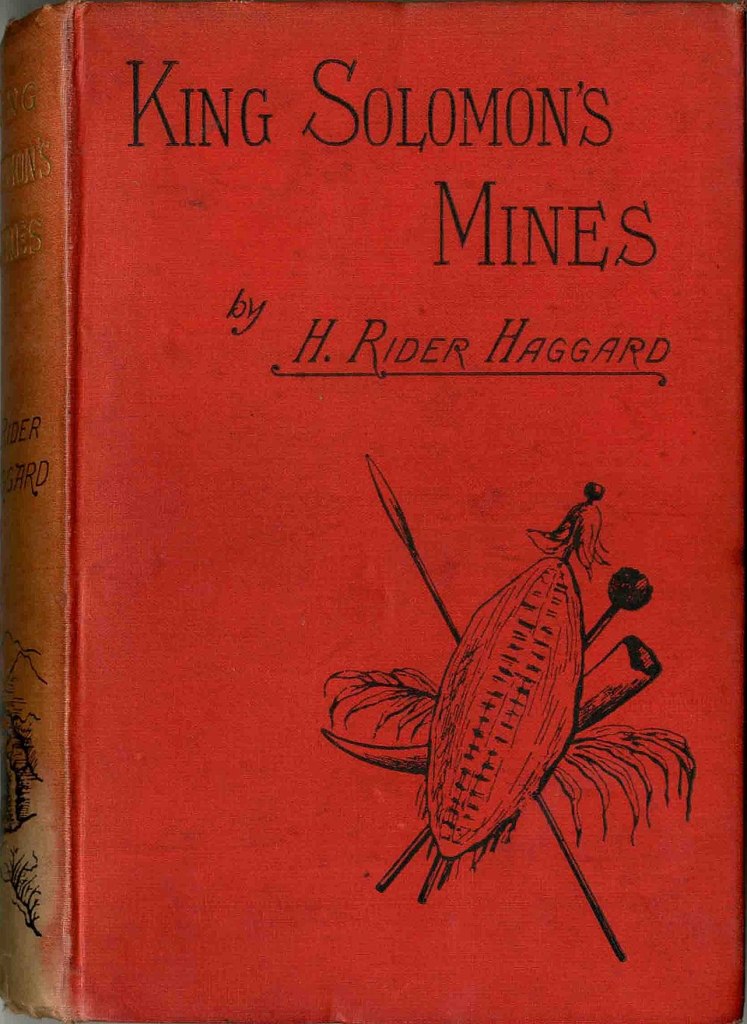
King Solomon’s Mines, H. Rider Haggard, 1885, 287 pages
Allan Quartermain is asked by Sir Henry Curtis and his friend Captain Good to lead a search for Solomon’s mines. Curtis is looking for his brother who was last known to be going to Africa to seek his fortune. Just before their departure for the interior, a splendid native, Umbopa, joins their ranks. The adventure is dangerous and possibly none of them will return alive. So far no man has survived the search.
After struggling forty leagues of desert north of the Kalukawe River, they reach the mountains. In a cave on the mountain they find Jose Silvestra, the last explorer to come this way, frozen stiff in the perpetual winter of the mountain peak.
In the valley on the other side of the mountain they see the remains of a road, leading through a green valley, just as the treasure map described. But this is Kukuanaland and is ruled by Twala, an evil and heartless king. It is only Good’s false teeth that makes the natives recoil in fear and prevents them from being killed. The natives begin to think they are ‘white men from the stars’ but they need constant reminders of the white man’s powers, straining the nerves and the ingenuity of the white explorers. Through witch hunts, battles, shows of ‘magic’ with their Winchester and strategic use of an eclipse, Quartermain, Good, and Curtis finally reach Solomon’s treasure mines with its unbelievable riches. But they hadn’t accounted for Gagool, the ancient adviser for King Twala.
The story behind the story is fascinating, too. According to Haggard’s biography, Haggard read “in one of the weekly papers” a notice of Stevenson’s Treasure Island. He read the book and was inspired to write his own book for boys. He made a bet with his brother that he could write a “thriller” without previous writing experience, just as good as Treasure Island. According to his notebooks, he wrote King Solomon’s Mines in 16 weeks from January to April, 1885. For six months, publisher’s rejected his manuscript. Then one of them took a chance on it and King Solomon’s Mines became the year’s bestseller, with printers struggling to keep up with demand.
Posters around London touted it as “The Most Amazing Book Ever Written.” At the time, Egypt’s Valley of the Kings and an ancient empire in Assyria had recently been discovered by real life explorers. The public’s imagination was primed for a story like King Solomon’s Mines.
Haggard had first-hand experience in Africa, fighting in the Anglo-Zulu War and the first Boer War. He displays some Africans as barbarians, but it is more due to their villianous part in the story. His writing shows more respect to their culture than some later writiers, even saying some Africans had more claim to the title of gentleman than some Europens who settled or adventured there.
King Solomon’s Mines was the first of a new genre – The Lost World. It inspired more books in a similar vein. It is written in 1st person, conversational style at a time when 3rd person omniscient was in vogue. King Solomon’s Mines has classical value because it reveals colonialists attitudes, such as killing a dozen elephants just for the ivory tusks.
(I skimmed through some of the battles. They were quite gory, just to warn you.)
Beyond Ivy Walls: LOL Bookclub
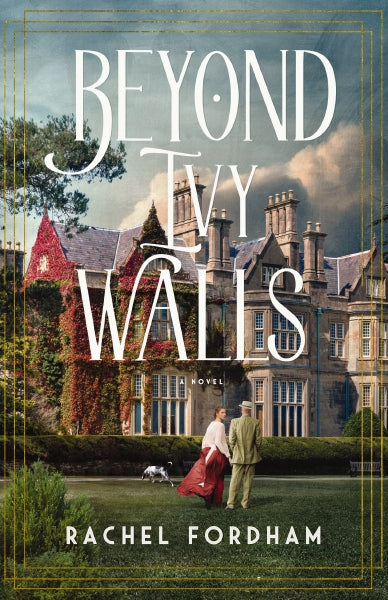
Beyond Ivy Walls, Rachel Fordham, 2024, 321 pages
In the spring of 1903, Otis Taylor has secretly returned to Monticello, Iowa. As the last known living Taylor relative, he has come to settle the estate and then leave his past behind him for good.
Sadie West comes to town for a job at the Hoag Feather Duster Factory to help pay her father’s doctor bills and hope to make ends meet for her mother and sisters. When she cannot pay her rent at the boarding house, she trespasses and spends nights in an abandoned building. In this way, Sadie and the mysterious Taylor bachelor cross paths.
Beyond Ivy Walls is a modern fairy tale, reminiscent of Beauty and the Beast. It emphasises inner character over outer appearance. The point of view alternates between Otis and Sadie. Otis’ social awkwardness is mitigated by communicating with notes and letters. Their banter felt a little out of character to me, but it wasn’t too distracting. Several times, when they were not understanding each other, they called a truce to give it time to come clear. I thought that was great relationship advice.
“Can we declare another truce? I want you to come with me, and later we can sort out who is at fault and who owes whom an apology. Will you come with me?
I especially liked the epilogue and how Sadie and Otis could put into practice all they learned and make a difference in a child’s life.
Rachel Fordham actually visited Monticello, Iowa to write this book. She spoke with descendants of the orginal Hoag factory owner, which I thought added an authentic touch. She lives on an island in Washington State with her husband, children and foster children. She has written at least six other historical fiction/romance novels, so if you like this book, check out her other titles, too.
Wishing you all a happy day! -Liz
 So She Reads