
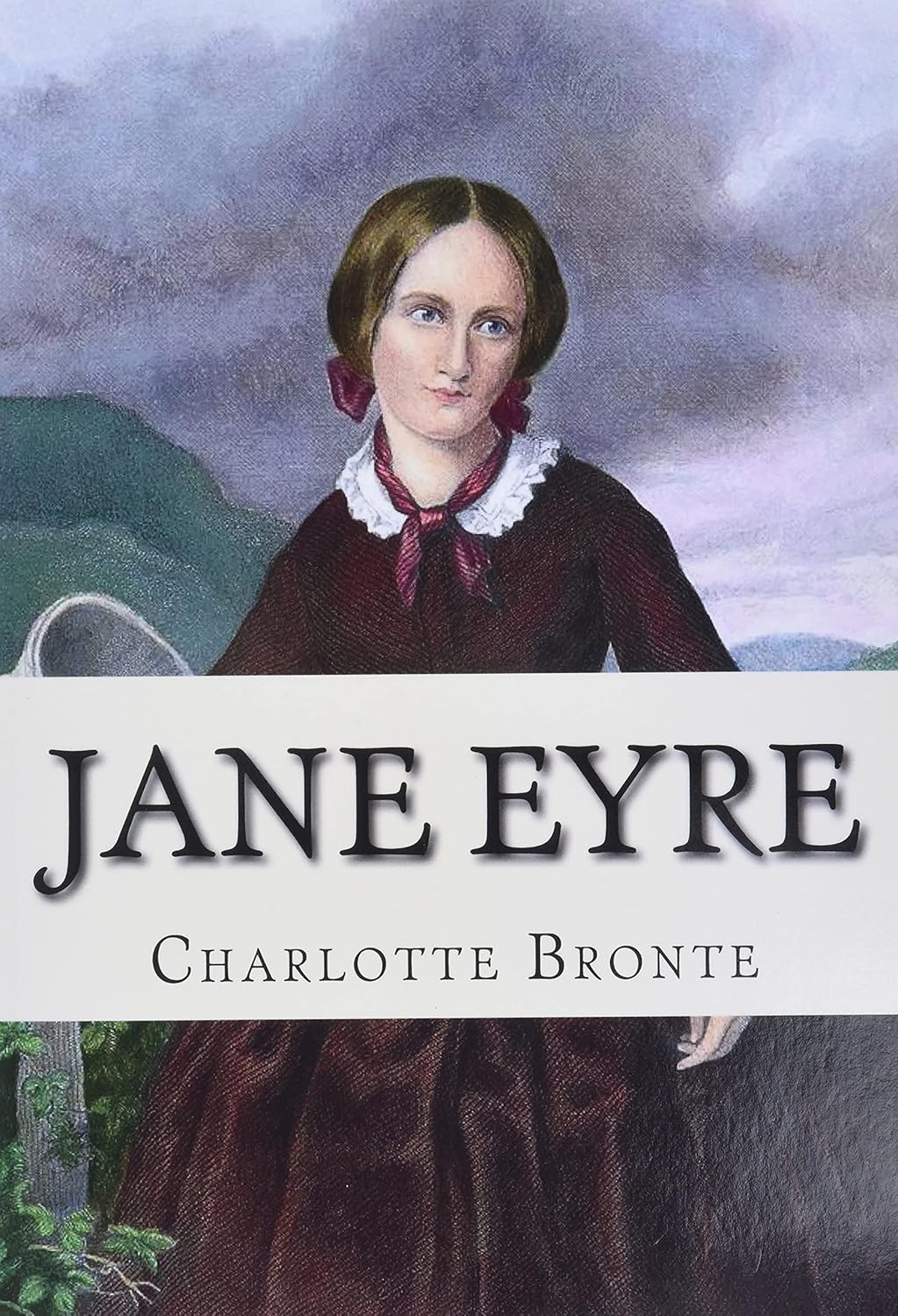
Charlotte Bronte, 1847, 19 hours or 464 pages, Gothic, Coming-of-Age
The story begins in the English country manor. Jane Eyre is ten years old, a poor, unlovely orphan with a tempestuous nature. She lives with an aunt and cousins who do not love her. Sometimes she bows under the strain, sometimes she fights back. After an episode that left her ill, a doctor advises the aunt to send Jane to school, hoping she would get better treatment there. At Lowood School she is treated with kindness by a few and still mistreated by others, usually adults who call themselves Christians and say they are doing their duty by her. After she finishes the courses, Jane becomes a teacher at Lowood School. When the headmistress marries, Jane feels an urge to move on. She advertises for a place as governess.
One person responds and Jane makes the journey to Thornfield to be governess to a ten year old French girl. Here she meets Mr. Rochester, the moody mysterious owner of Thornfield. During her time at Thornfield there are strange happenings and unexplained noises in the old, three-story home. But she is happy and falling in love, until Mr. Rochester reveals a devastating secret about his past.
Principles are not for times when there are no temptations. They are for such moments as this when body and soul rise in mutiny against their rigor. If, at my individual, I might break them, what would be their worth? Forgone determinations are all I have at this hour to stand by. There I plant my foot.
Jane
Jane flees to Millcote, penniless and homeless, she attempts to find work, eventually begging for food. The Rivers’ family, living out on the moor, take her in and give her a job teaching school in the local parish. Jane struggles to make sense of her life, to forgive, and find her place there. Eventually she returns to Thornfield, but is Mr. Rochester still there? And will he still love her?
The Gothic elements in this story include a dark mansion, ghostly voice, dreams, omens, and gloomy or dramatic weather. Things happened at dusk or the dead of night. I’m actually not sure if the ending was happy or disappointing or bittersweet. It could be interpreted different ways, depending on what era you are alive to read it in. This description doesn’t sound very appealing, but the book was never frightening or dreadful for me. Except when St. John tried to convince her to marry him, saying it was God’s will. Once began, there was no question if I would finish it or not, even though the characters are very flawed and most aren’t really likable.
As far as the coming-of-age part, Jane changes from a revengeful, angry child to forgiving those who mistreat her and goes on to make her own choices.
Which was a very controversial thing for a woman to do in 1847.
As I started to write this review, I wondered how this book was received when it was written in 1847. A little research revealed the reactions were divided. More conservative viewed it at anti-authority and anti-Christian. Their reason was Jane achieved happiness without man or God. These reviewers saw her as stubborn, independent, and disregarding social destinies accepted at the time. They admitted the story was engaging and hard to put down.
Secular reviewers did not mention the above problems, but rather said the story was too unlikely and the characters not well developed. They also said the story was difficult to put down.
Charlotte Bronte used the pen name Currer Bell and kept her identity a secret. Most publishers would have needed to be persuaded to publish a book by a woman in those days. Who the real writer of Jane Eyre was, was the talk of London.
After reading the book, it was very enlightening to read the Cliff Notes. This summarizes the complete story so there will be no surprises if you read these notes before reading the book. But I also understood the events and their implications better after reading the notes.
One significant line is: Reader, I married him. It would have been much more acceptable to say, Reader, he married me. This statement was considered too assertive for a woman in 1847.
I was surprised at all the Biblical references. Most actual quotes of the Bible were used by the adult Christians to bully or terrorize Jane into doing their will. Jane’s forgiveness of her Aunt Sarah was unexpected but satisfying. I had the impression Mr. Rochester even had a change of heart.
This is not a comforting, easy read. It will certainly make you think and you will have opinions about the characters and the actions they chose. Let it inform your own choices, 177 years later.
–Liz
 So She Reads
4 responses to “Jane Eyre”
I read Jane Eyre when I was about 20 years old. It was probably one of the first books I stayed up til the wee (or not so wee!)hours of the morning to finish. (I was teaching school away from home and it was Friday night:) I don’t remember doing much analyzing, just couldn’t put it down!
Hi Cecile. I couldn’t put it down either, even though I didn’t always like Jane much. Or even anyone else in the book – certainly not Mr. St. John. I cannot even remember his first name; it’s just as well!
How did you like Wuthering Heights, by Emily Bronte? I was able to read that one fairly quickly, but I’m not an extreme fan of the Bronte sisters. If you can convince me otherwise, I would be thrilled, but the macabre, morbid style didn’t appeal to me. The beginning of Jane Eyre is a treat, though.
I started Wuthering Heights and not s single person seemed likable to me. I did not finish it. No, I don’t care for the darkness in the books. Maybe it was the going style in the 1800’s. Thanks for reading!