
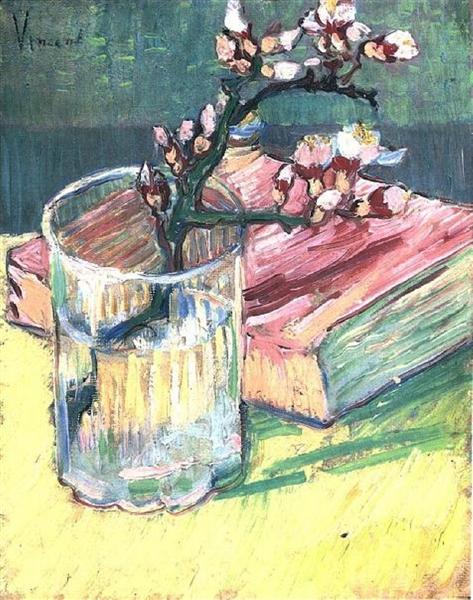
Blossoming Almond Branch in a Glass with a Book, Vincent van Gogh,1888, oil on canvas, Arles, France.
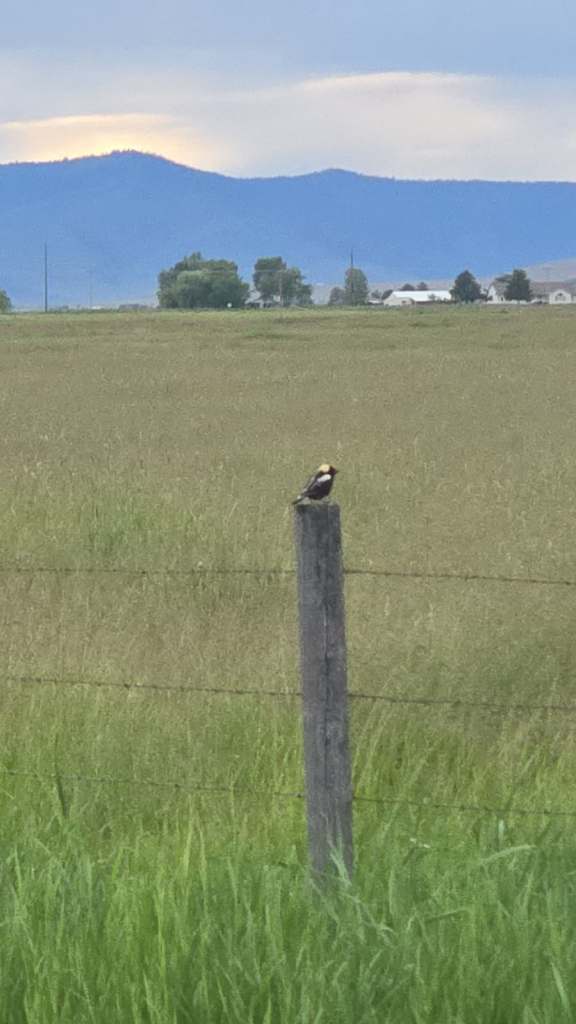
A bobolink flies from post to post in front of me as I take my walk. That’s what pulls me out every day to see if he’s still there.
I’m not sure how many walks I will have time for this week as high priority jobs include shopping for groceries, helping cook a Saturday night supper for 300 and preparing for overnight company.
A friend sent me a picture of a plaque with watercolor flowers and the words: Wildflowers don’t care where they grow. She and I used to sing a song with those words and it brought back, for a moment, the feelings of those days. It inspired me to trust the events of this week to the One who clothes the lily of the field. I will be carefree as a wildflower and take a little time to talk about books this morning.
At the beginning of the year, I made a goal to read one classic a month in 2026. Then March was gone but at least half of Anna Karenina was left. It has taken me three months to read, even though I read several chapters most days. The first of June I started Middlemarch, another door-stopper of a book, and expect it to be my summer classic. If you haven’t yet, try a long classic. It’s an experience and an adventure!
Anna Karenina: Classic

Anna Karenina by Leo Tolstoy, 1878, realist tragedy, 868 pages
Happy families are all alike; every unhappy family is unhappy in its own way. -first line of Anna Karenina
Anna Karenina is a magnificent exploration of emotional conflict and the consequences of choices. There are two main characters and the story follows the two main characters, Anna and Levin, as one follows temptation and the other searches for meaning. It takes place in the world of Russian nobility from the winter of 1874 to the summer of 1876.
The action centers around Moscow, St. Petersburg and the Russian countryside. Moscow was traditional; people there upheld the old rules of behavior and standards. St.Petersburg seemed to have bad effects on the characters; it was a modern town obsessed with European fashion and politics. It was always a relief to go to the country and see things growing, seasons changing, the musik working for his bread. All good things in the novel are related to country life.
With over 160 characters, and many of them going by various titles and nicknames, I was surprised to keep it (mostly) straight. Tolstoy wrote in the omnicient view, and this means you know what everybody is thinking, even, once, reading the dog’s mind! No charater is perfect, but nobody is a real villian, unless it’s Stepan. I just kept wishing they would see the light and do right! The inner monologues make them seem like real people. The style of writing is very plain and straight-forward; that’s what makes it seem so real.
In my opinion, Levin is the main character, in spite of the book’s title. Anna wanted to be loved. Levin is looking for meaning. She’s in a marriage without love so she has an affair. (There’s nothing explicit.) Levin tries to find meaning in hard work, improved farming, philosophy, but eventually sees that only faith in God gives meaning. Everyone seems to be against Anna— but it’s really herself. No one seems to be against Levin—but it’s really himself.
In this novel, I think Tolstoy was trying to ask, and maybe answer, these questions: What is the meaning of life? Why am I here? How do I live well? He seems to suggest the two main characters could only go in the directions they did. Tolstoy never moralizes, or tells the reader what to believe, he simply illustrates many different choices and their likely consequences through the characters he created.
Anna Karenina will stick with you and you will likely ponder the meanings of its events for months or even years after reading it. The characters seem like real people, the events and the place get under your skin and will add color and meaning to your life. If you have read Anna Karenina, please add your thoughts in the comments. I would love to hear them.
I’ll go on getting angry at Ivan the coachman, I’ll go on arguing, go on expressing my idea inappropriately, there will still be a wall between the inmost shrine of my soul and other people, including my wife; I’ll go on blaming her because of my own fears, then repent; I’ll go on not understanding with my reason why I pray, and go on praying— but from now on, my life, my whole life, no matter what happens to me, every second of it, is not only meaningless as it was before, but it has the incontestable meaning of the goodness I have the power to put into it! -ending lines of Anna Karenina
Their Eyes Were Watching God: RYBS Challenge
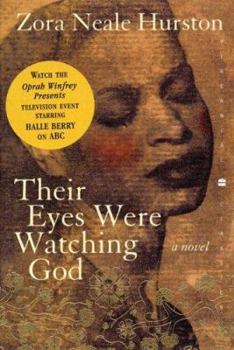
Their Eyes Were Watching God by Zora Neale Hurston, 1937, 193 pages
How different from 19th century Russian nobility and tragedy can we get? The next book I read was Their Eyes Were Watching God and it was a culture shock! It was so different from AnnaKarenina it seemed like a different language at first.
This is the Southern love story of Janie Crawford, a young Black woman in Florida in the 1930’s. Through three marriages, poverty and trials, she refuses to give in to sorrow, fear, or foolish romantic dreams. It is witty, fresh and full of novel imagery, along with the colorful, Black dialect. The entire book is Janie telling her life’s story to Phoebe, her friend.
I do not endorse all of Janie’s choices. She isn’t an exemplary heroine. But this is a Black author, writing about a Black community in a way that gives a glimpse into their real lives. Since I have very little knowledge about Black culture, this book helps me understand them just a bit.
Over the years there has been controversy over this book. It ignores racism. There are no vicitms, just the story of one woman’s place in a joyful, rural, Black community. Some critics say the phonetic speech reinforced Black caricatures. I personally thought it celebrated Black culture. You may interpret this story differently than I did. I wish I had someone to discuss it with to broaden my understanding. Possibly best for adult readers only.
The title of the book comes from some lines near the end. Janie and Tea Cake are caught in a violent hurricane, desperately trying to survive. As they watch the devastation the wind and water bring, they realize that regardless of any human desire for love, money or control, we are all ultimately subject to a greater force—God.
With Christ in the School of Prayer: Christian Classic
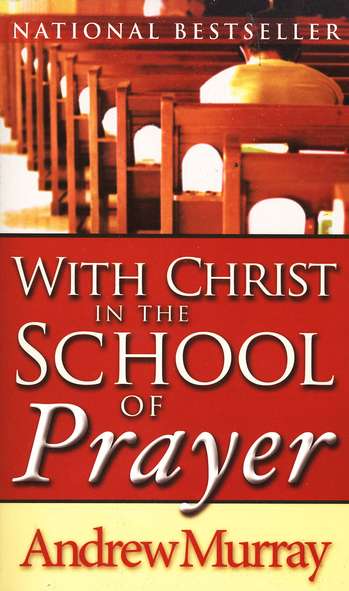
With Christ in the School of Prayer by Andrew Murray, 1885, pages?
Andrew Murray was a South Africa Dutch Reformed Church missionary in the late 1800’s. This book is his treatise on prayer- how and why every Christian should pray without ceasing. It treats the subject as lessons that take the reader deeper and deeper into the mysteries and blessings of prayer.
My main takeaway: prayer will be as effective as my life is purely in God’s conrol. There was so much of it I did not understand. Yet I understood enough to be awed at the power and mystery of prayer. This book is available from Gospel Publishers and you can listen to it on Librivox.
Palace Beautiful: WOTY

Palace Beautiful by Albert E. Sims, 1992, 47 pages
This allegory tells in memorable detail the story of the Keeper of the King’s castle, and how the Black Dwarf decieved him and claimed the castle for a time. It is written in the style of Pilgrim’s Progress, but is a short story that illustrates our struggle with ourselves when we give ourselves to the King’s service.
There is an axiom that however cruel his bondage, he who pines for liberty is no real slave. -From Palace Beautiful
Stop and smell the roses this summer!
-Liz


One response to “The Bookmark: June”
I read Anna Karenina for the first time about seven years ago. All the classic Russian books I’ve read have multiple names and nicknames for each character–it takes a while to get everyone straight. I liked Levin’s story much more than Anna’s.
Reading a big classic a month is a lot! It often takes me about weeks.