
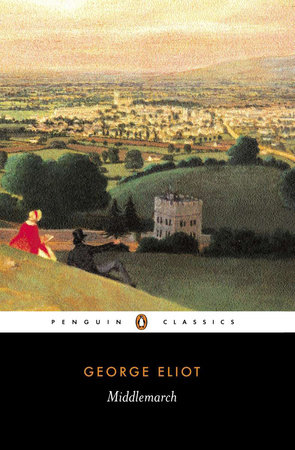
The books I read not only speak to me, they speak to each other. For two months I have been reading Middlemarch by George Eliot. When available, I have been listening to the Unselected Journals of Emma M. Lion by Beth Brower. This review is going to compare and contrast the two books.
I’ve been enjoying both books, but occasionally I get a little too much of Rosamond or Mr. Bulstrode and I have to leave Middlemarch for a vacation in St. Crispian’s.

That every day should leave some part free for a sabbath of the heart. –Beth Brower, The Unselected Journals of Emma M. Lion: Vol. 8
Middlemarch takes place from 1829-1832. It was originally published (1872) in serial form, 8 books of about 100 pages each. The omniscient point of view lets us know all characters thoughts and desires and worries. Themes explored in Middlemarch include harsh social expectations, imperfect marriage and the efforts of human choice contrasted with chance. Librivox says it takes 35 hours of listening. Every chapter begins with a quote from literature that is a key to the events in the chapter. There are three, maybe four, main couples stories told and most of the action happens after they are married.
The Unselected Journals of Emma M. Lion takes place fifty years later than Middlemarch, beginning in 1883. It is currently published in serial form and there are 8 installments available. I’ve heard the author has plans for up to 25 journals. If you have listened to all eight, you have already spent 60 hours with the inhabitants of St. Crispian’s, nearly twice as long as it takes to listen to Middlemarch. These journals are written in a single point of view – that of one Emma M. Lion- so we can only observe others by her report of their actions and words. Every chapter is sprinkled with quotes from literature and I’m not sure if they are keys or not. Themes focus mostly on platonic found-family dynamics, love of books, resiliance through life’s troubles, quiet wit. As of volume 8, one romantic attachment is on a shaky ground.
The author of Middlemarch occasionally breaks the fourth wall and says something directly to the reader. For example, in chapter 43 the narrator makes a comment on general human behavior: “And certainly, the mistakes that male and female mortals make when we have our own way might fairly raise some wonder that we are so fond of it.” The author of Emma M. Lion never breaks the fourth wall, but she allows Emma to break away from her journal to say, Beth would like to thank you, the reader, for wandering into the neighborhood and deciding to stay…
Both of them contain an unconventional (for her times) heroine. I will call Dorothea Brooke a heroine because Middlemarch begins and ends with her, but there would be others who could vie for the position as well. Both girls want autonomy to do as they wish — Dorothea has idealistic plans for making the poor tenants’ lives easier. Emma wants to keep Lapiz Lazuli House and have money to buy books and anything else she needs. Dorothea is self-deluding and stubborn, but loveable in her odd queenly way. Emma is more self-aware (maybe it comes from keeping a journal) yet I am not always sure she is a reliable narrator. Her faults are mostly social blunders. Both girls are orphans and living with relatives, Dorothea with her absentminded uncle, Mr. Brooke and Emma with her crazy-minded cousin, Mr. Flat.
England, in the 1830’s, was dealing with the Age of Reform, a major 19th century movement defined by the Reform Act of 1832. Property owenership laws were standardized and more men allowed to vote, but the reform was beleaguered with longstanding debates over it’s clauses, nature and impact. These controversies are a factor in some of the characters’ lives in Middlemarch. There was also a railway boom and rural unrest, which are both featured. The 1880’s of Emily Lion’s England, included more major social reforms, political rivalries and shocking crimes, which the newspapers capitalized on.
Middlemarch is said to be the best English novel ever written by people who know these things. Others praise it for its psychologically complex characters (all of them, not just the main ones) its profound moral wisdom and a vivid study of provincial life.
Emma M. Lion has become a massive word-of-mouth phenomenon, with many fans describing it as an addictive escape. The books have some of the Jane Austen slow-burn quality, while Emma herself shares a bit of Anne Shirley’s personality. It is a slice-of-life view of 1880’s London.
I could also compare Pierce and Ladislaw, Arabella and Rosamond, Tertius and Aunt Eugenia, Sir James Chettam and the Duke of Islington, and maybe Hawkes and Vicar Fairbrother, but I think I’ve taken this exercise far enough.
Her finely touched spirit had still its fine issues, though they were not widely visible. Her full nature, like that river of which Cyrus broke the strength, spent itself in channels which had no great name on the earth. But the effect of her being on those around her was incalculably diffusive: for the growing good of the world is partly dependent on unhistoric acts; and that things are not so ill with you and me as they might have been, is half owing to the number who lived faithfully a hidden life, and rest in unvisited tombs.
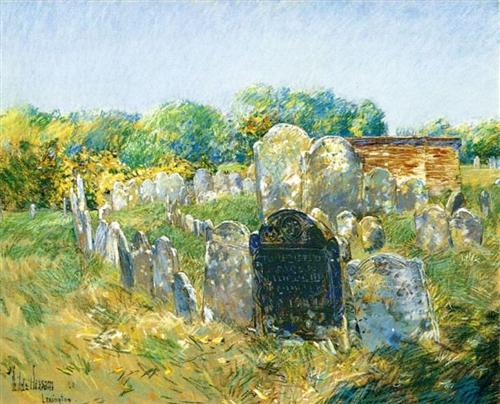
Graveyard at Lexington, Childe Hassam, 1891


2 responses to “The Bookmark: From Middlemarch to St. Crispian’s in July”
I read Middlemarch for the first time nine years ago, and Emma is next in my queue, so I appreciated the comparisons. That last line you quoted from Middlemarch is my favorite from the book.
Hi Barbara, I haven’t been looking at my comments for awhile! There’s also a few lines in Chapter 29 that I like almost as well, because none of us want to be like Casaubon. “It is an uneasy lot at best, to be what we call highly taught and yet not to enjoy: to be present at this great specatcle of life and never to be liberated from a small hungering shivering self – never to be fully possessed by the glory we beholdn never to have our consciousness rapturously transformed into the vividness of a thought, the ardour of a passion, the energy of an action, but always to be scholarly and uninspired, ambitious and timid, scrupulous and dim-sighted.”