
By Liz Jantz
On particularly beautiful days, we ask each other, “Did you see the mountains today?”
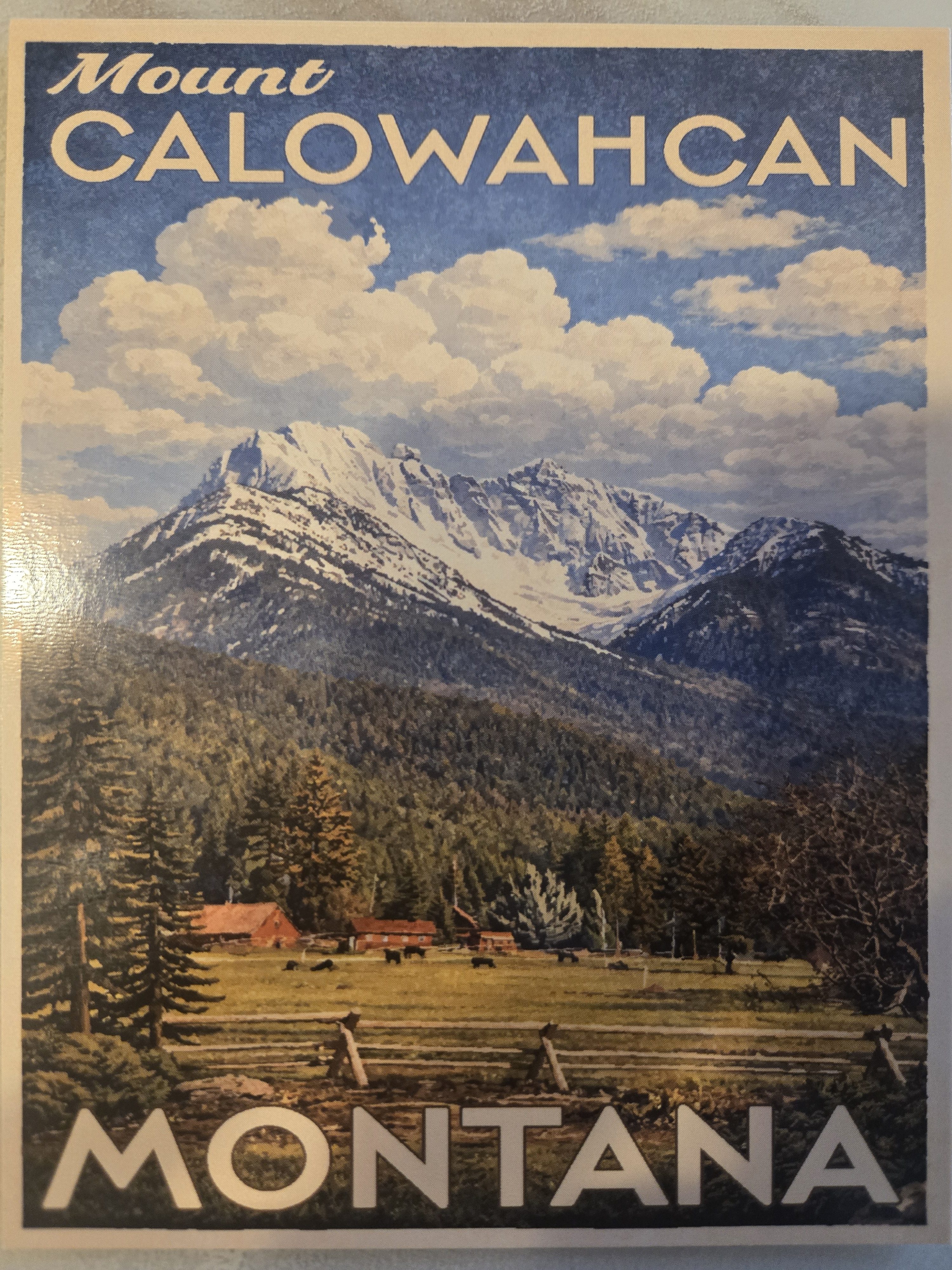
As we rounded the curve into the valley, the mountains bounding the eastern horizon sprang into view. Pristine whiteness of their snowcapped peaks contrasted with the blue sky, dazzling in their brightness. The windswept ridges were adorned with a cornice of ice curling on the leeward side, where the prevailing winds moved. We could see the perpetual snow of a glacier flowing down a deep ravine above the treeline.
The crags and crests were deep with snow, the trees on the slopes were dusted with white, the leeward side just a shade whiter than the windward. The saddles and spurs and buttresses stood out in sharp relief. The sight of this aweful and magestic range filled us with wonder and terror at the same time, the effect lifting us above the cares of the world. The piedmont gathered at the mountains base, a collar of tamarack, pine and fir. Our hearts quiet and breathing deepens staring at this stupendous scene. As the whole sweeping panorama came into view, nobody said a word. We silently made our way across the valley floor against this dramatic background.
Mountains are universally considered to be beautiful. The dictionary says a mountian is a natural rise of land that is higher than a hill. That dry definition doesn’t give you as much pleasure as the description above, and why not? Because mountains are metaphors. Mountains are symbols. Mountains transcend words.
But the words matter. All the different names of the parts of mountains bring the picture more clearly to mind.
My year of beauty is coming to an end. Beauty has been a complex, difficult and pleasing word to focus on this year. Much of beauty I don’t claim to understand. Why are humans drawn to it? For that matter, why do we even have the capacity to notice it? Greeks claimed it was objective symmetry and order. Fibanacci identified what he called a divine proportion. Evolutionists say it is for preservation of the species. And laymen claim beauty is in the eye of the beholder.
But I have come back again and again to one simple idea. Beauty is all around and the beauty I see is the beauty I notice. Things that I don’t know the name for are things I don’t notice. So to see more beauty, I need to know the names of things so I can notice them.
When I think of naming things, of knowing their names, I think of Adam in the Garden of Eden. God brought all the animals to him to see what he would call them, and whatever Adam called them was their name.
I think of the gardeners at Bibler Gardens in Kalispell. They could name any plant I pointed at in their acres of garden. I marvelled and thought what satisfaction that must give to know the name!
I think of the Butterfly House in Missoula and every butterfly having a name.
I think about naming feelings. There’s the saying: name it to tame it. Sure, I can name sad, angry, happy, excited, but I knew there were more more words that expressed all sorts of nuances in feelings. How specific can I get?
I think of people who seem nameless – clerks, waitresses, janitors, the person who cut in front of you, or hundreds of Christians in Nigeria suffering for their faith.
And I think of the creature in Frankenstein, who was never given a name.
In some countries a name day celebration can surpass birthday celebrations, but it’s a completely unfamiliar tradition in the United States.
And I have heard of parents who name their baby, and then later change the name because it just didn’t seem to fit.
“Fear not, for I have redeemed you; I have called you by name, you are mine.” Isaiah 43:1
Words that name things matter a lot.
And what does it have to do with my word of the year? How is naming a part of the beauty of the world? We miss so much of the world because we don’t know the name for it. If life feels dull or boring or flat, chances are you aren’t noticing most of it.
The English language contains thousands of words that name things. If you know the word, the specific word, the mind is more engaged to notice. Of course, you will ‘see’ a wall and avoid walking into it even if you do not know the architectural term, but you will likely not truly notice it until you know the right word.
You might think this is boring. But if you knew all the names for different knots, like a sailor might, knots would become very interesting. If you could name every type of architect, a tour of Rome would bring many more things to mind for you than it would for me, who knows nothing of architecture.
What is your passion? Is it gardening, sewing, construction? Likely you know lots of terms for all the parts, and likely you notice much more than someone who isn’t familiar. You get so much more pleasure out of that job than others who don’t know the specific words. And likely, there are more words you could learn.
Even if you never use these words in conversation, they will color your world with beauty, you will notice and appreciate so much more, the world will come alive with nuance and variety. Your interst will grow, and you will start to see all the connectedness in the world. You will marvel and wonder and your mind gets pleasure and delight in double measure.
Is it possible that some people are born orophiles or is appreciation built simply by knowing more names for all the parts? When I first moved to Montana, the mountains seems foreboding and brooding, but now I know their names.
Today the mountains are actually misted in fog; the tops are hidden in low-hanging gray clouds. Their appearance is blurred and distant, not at all like my description above. I brought back the feeling of awe and wonder just with the words, the specific words and that is the power of naming.
-Liz
What can you name that helps you see more beauty in the world? Tell me about it in the comments.

Just a reader who loves to share good books.
4 responses to “Name the Beauty”
This is beautiful. Thank you for sharing your view.
Love this!
Thanks, Liz! I agree!! Thank you for your words!! Last week, during breakfast, we were watching a cloud of blackbirds swarm in the crabapple tree and land on the lawn. Suddenly, someone said- Look! There’s a white blackbird! And sure enough! A totally white blackbird! Then we learned what leucistic birds are!
I always love a WOTY inspired post! Beautiful words on beauty. 🫶🏻