

Blossoming Almond Branch in a Glass with a Book, Vincent vanGogh,1888, oil on canvas, Arles, France.
As I sit on the porch on an early summer afternoon, the clouds are gathering. To the south and west some blue sky is visible, but all other parts of the sky are shades of gray, gray-blue and sun brightened white. A robin just flew under the porch roof and stie on the chair back, looking at me. Swallows swoop in loops under the eaves and out again. Crickets play their fiddles in the grass. The long summer stretches ahead, just like it always has at this time of year.
In a few minutes, I hope to plan my summer reading. It’s going to be my reward for finishing this article.
The Moonlight School
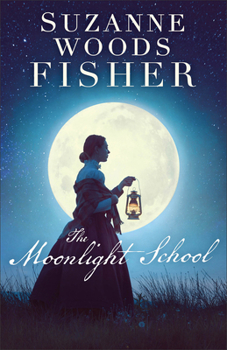
The Moonlight School, Suzanne Wood Fisher, 2021, 311 pages, historical fiction
In 1911, Lucy Wilson, haunted by a personal tragedy, goes to Rowan County, Kentucky to help her cousin, Cora Wilson, superintendent of schools. Leaving behind her pampered life, she is very much out of her element and appalled by the living conditions in Appalachia. While there as a scribe, writing letters for the locals, she learns to love them and works to help them. Along the way, she finds purpose, love and healing from her emotional wounds.
Lucy’s cousin, Cora is a woman with a mission, a mission to teach everyone to read, and Lucy gets caught up in her enthusiasm and faith. They invite the adults to meet at the schoolhouse on nights when the moon gives enough light to travel the narrow paths of the mountains. Their faith in everyone’s ability to learn to read became a model for many years in the area.
Cora Wilson Stewart was a real person who singlehandedly made reading available to many illiterates, young and old, in Rowan County, Kentucky. The author’s notes at the end of the book tell what parts were true and what she imagined, and some facts about the real Moonlight Schools. I foiund the true story of Ms. Wilsom to be more interesting than the fiction.
It takes an effort of the imagination to put oneself in the place of the illiterate. To picture what life is like for one who must get all his infomation by ear. If a man cannot read or write or vote, he cannot speak. He is mute. He is forgotten. You might think it’s a pity they cannot read, but the real tragedy is they cannot speak. -Cora Wilson Stewart
Theo of Golden: WOTY Challenge
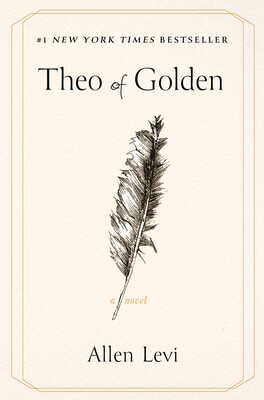
Theo of Golden, Allen Levi, 2025, 400 pages
Theo, an elderly man with a mysterious past, arrives in Golden, a small southern town. In a local coffee shop, he sees portaits of the locals made by a resident artist. Theo sets out to buy each portrait and give it to it’s rightful owner. All he asks in return is to hear their story.
I only read this book at the recommendation of others. I thought it would be a lot like books by Andy Andrews, and I wasn’t wrong. It’s been really popular, with weeks on the wait list at Libby, which also made me curious.
To me, the people do not seem completely real. That one person, Theo, could have done so much, thought so carefully about every move he makes, and could have so much influence on everyone he talks to seems far-fetched. Theo was an artist, bird-watcher, letter writer, gift giver, and still had time to spend observing, studying, really seeing. Then it all ended accidentally, which was quite jarring.
It would likely provide a lot of discussion at bookclub meeting. Have you read this popular book, that’s been number one on the New York Times bestseller list. What did you think?
As strange as it might sound, Asher, especially at this, my happiest season of life, I long for Heaven. It might still be many years away, but I think of it often as the low sun and long shadows lengthen over my days. Some laugh, of course, at the notion—many of my artistic peers, and yours, find my hope positively naive and fanciful —but beauty, throughout my life, has always seemed to hint at something more. I long, as one has said, not just to see it but to verily become part of it. Enough of this standing on the outside looking in. Soon, if the Grand Artist has spoken truthfully, soon enough, the door will open for me. –Theo in a letter to Asher
The Kneeling Christian: Read My Bookshelf Challenge
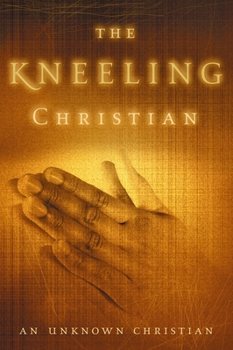
The Kneeling Christian, Anonymous, written sometime before 1930, 105 pages
This book is twelve short chapters on many different aspects of prayer. The author discusses who should pray, how to pray, understanding Jesus’ incredible promises, and what might hinder prayer. Each subject introduces a lot to think about. This is one of those books that could be read many times and the reader come away with new insights. It made me want to know more, so next I am reading With Christ in the School of Prayer by Andrew Murray.
God is more willing to hear than we are to pray.
Work, think, pray, but the greatest of these is prayer.
Answered prayer may be the Christian’s daily experience.
–Liz
What do you plan to read this summer? If you need some ideas, check out these articles:


One response to “The Bookmark: May”
I’ve just started Theo. Honestly, the premise didn’t sound very exciting to me. But I have heard so many people rave about this book, I decided to check it out.
I’m also reading–or listening to–The Lumber Baron’s Wife by Lynn Austin. It’s making me wish I could put aside everything else and just read it to the end.